Tarot for beginners.
You don't need all 78 cards memorized to start reading. Here's the honest minimum, plus the complete illustrated deck — all 22 Major Arcana and 56 Minor Arcana cards — for when you're ready to go deeper.
Where to actually start
A full tarot deck has 78 cards — 22 Major Arcana (the "big" archetypal cards) and 56 Minor Arcana (four suits of everyday, situational cards, similar in spirit to a standard playing-card deck). You do not need to know all 78 to give a genuinely useful reading.
The most beginner-friendly approach: learn the 22 Major Arcana first. They cover the big-picture themes — love, change, fear, success — and a simple three-card pull using only the Majors (past / present / future, or situation / action / outcome) is a complete, useful reading on its own. The Minor Arcana below rewards a closer look once the Majors feel familiar — each suit has its own personality: Wands (fire) for action and ambition, Cups (water) for feeling and connection, Swords (air) for thought and conflict, Pentacles (earth) for money, work, and the body.
Your first spread
Shuffle, pull three cards, lay them left to right. Card one: where things stand right now. Card two: what's being asked of you. Card three: where this is heading if nothing changes. Read them as a sentence, not three separate facts — the story between the cards usually matters more than any single meaning.
Reversed cards
A reversed (upside-down) card isn't automatically "bad" — it often just means the card's energy is blocked, internalized, or not yet expressed, rather than its opposite. Many beginner readers choose to ignore reversals entirely at first and only add them once the upright meanings feel automatic — that's a completely valid way to start.
Choose a layout
A "spread" is just the pattern you lay cards in — different patterns are built for different kinds of questions. Pick one below and click through for the full step-by-step instructions on how to lay it out and read it.
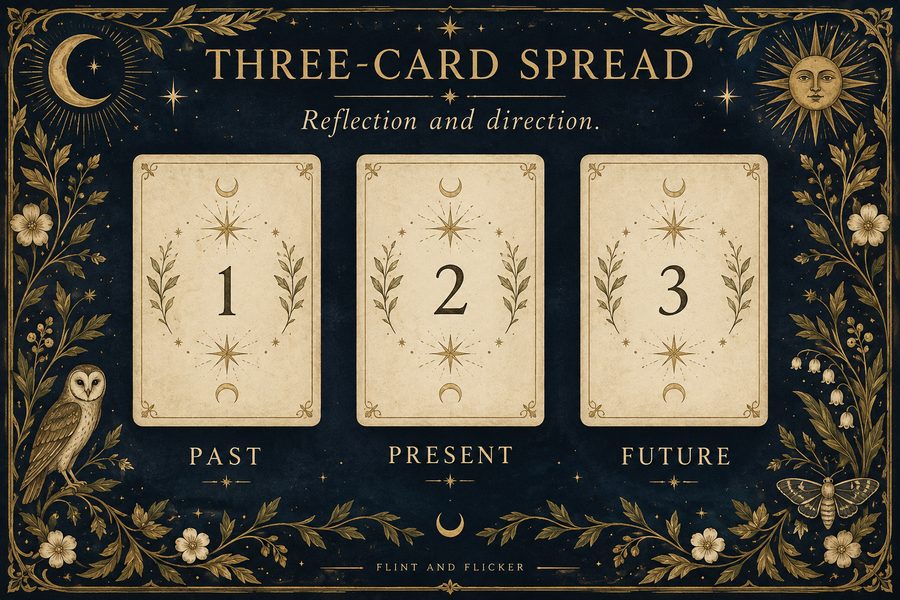
Three-Card Spread
Reflection and direction. Quick, everyday, and the best place to start.
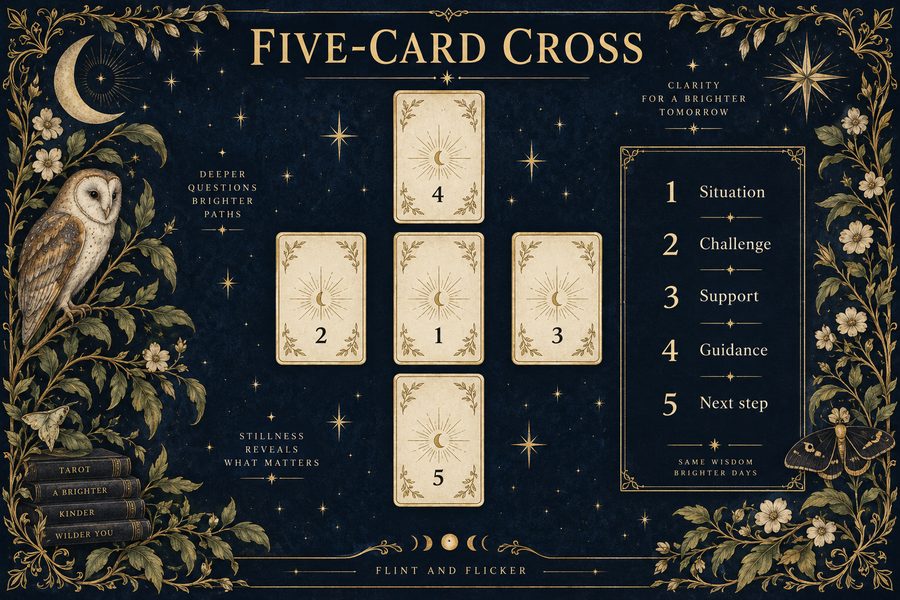
Five-Card Cross
A little more texture than three cards, without the full ceremony of the Celtic Cross.
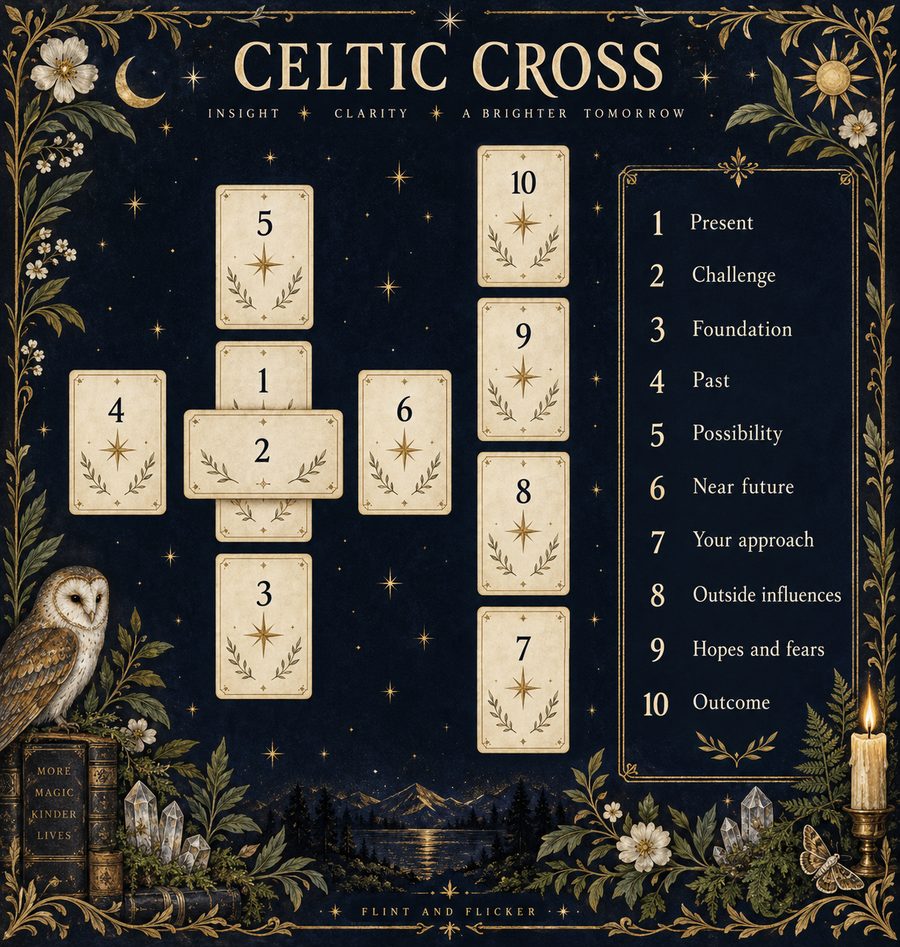
Celtic Cross
The classic 10-card deep-dive, for one important question you want to sit with.
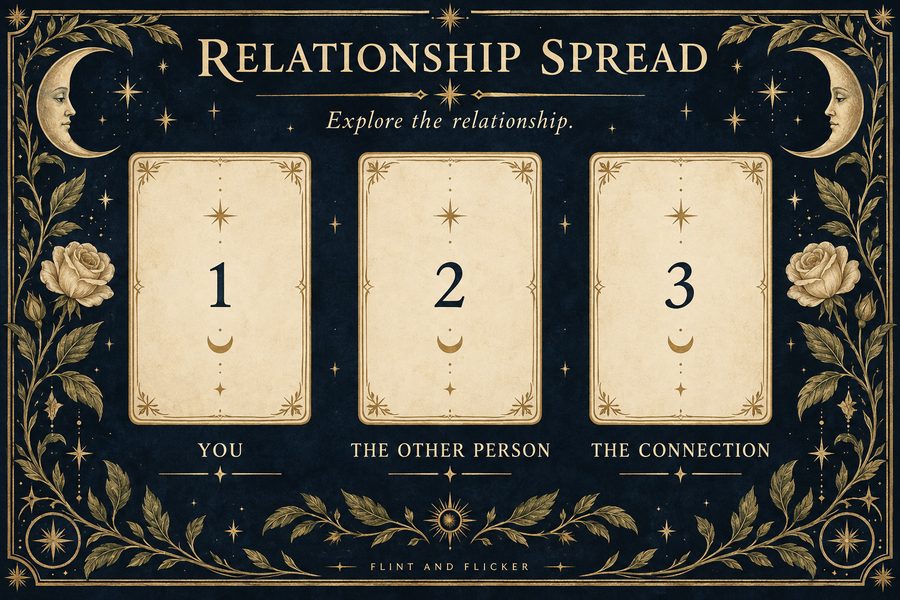
Relationship Spread
For questions about a specific relationship — romantic, platonic, or family.
Three-Card Spread
Best for daily check-ins, quick questions, or as your very first spread while you're still learning the cards.
How to lay it out: Shuffle while holding your question in mind — general ("what do I need to know right now?") or specific, either works. Draw three cards and lay them face up in a single row, left to right.
- Past — what led to where you are now.
- Present — what's active for you right now.
- Future — where things are heading if nothing changes.
How to read it: Treat the three cards as one sentence, not three separate facts — the story running between them usually matters more than any single card's meaning. Reversed cards work fine in this spread too, once you're ready for them.
Five-Card Cross
Best for a specific question that needs more texture than a three-card pull, without committing to a full Celtic Cross.
How to lay it out: Shuffle, then lay five cards in a plus/cross shape. Card 1 goes down first in the center — then 2 to its left, 3 to its right, 4 above it, and 5 below it.
- 1 — Situation (center): the heart of the matter.
- 2 — Challenge (left of center): what's working against you.
- 3 — Support (right of center): what's working in your favor.
- 4 — Guidance (above center): advice for how to move through it.
- 5 — Next step (below center): the concrete action to take.
How to read it: Start with the situation in the center, then weigh the challenge and support cards against each other side by side, and finish by looking up to guidance and down to your next step.
Celtic Cross
The classic deep-dive spread — most tarot readers learn this one eventually. Best saved for a single question you actually want to sit with, not a quick pull.
How to lay it out: Shuffle, then build it in two parts. First, the center cross: card 1 goes down in the middle, then card 2 is laid sideways directly across it (this is the "cross" the spread is named for). Card 3 goes below the pair, card 4 to the left, card 5 above, and card 6 to the right. Second, the "staff": lay cards 7 through 10 in a vertical column to the right of the cross, starting at the bottom with card 7 and working up to card 10 at the top.
- 1 — Present: where you stand right now.
- 2 — Challenge (laid sideways across card 1): what's crossing you.
- 3 — Foundation: the deeper root of the situation.
- 4 — Past: what's recently behind you.
- 5 — Possibility: the best that could happen.
- 6 — Near future: what's coming shortly.
- 7 — Your approach: your attitude or role in this.
- 8 — Outside influences: other people or forces at play.
- 9 — Hopes and fears: often both at once.
- 10 — Outcome: the likely resolution if things continue as they are.
How to read it: Treat it as two halves. The center cross (cards 1–6) tells the story of the situation itself. The column on the right (cards 7–10) tells the story of you moving through it. Give yourself real time with this one — ten cards is a lot to hold at once, and it's fine to read it in stages rather than all in one breath.
Relationship Spread
Best for questions about a specific relationship — romantic, platonic, or a strained family bond.
How to lay it out: Shuffle while holding the relationship (and, if you have one, your question about it) in mind. Draw three cards and lay them face up in a row, left to right.
- 1 — You: your energy or role in the connection.
- 2 — The Other Person: their energy or role.
- 3 — The Connection: what's happening between you, independent of either person alone.
How to read it: Read the first two cards as a conversation, then look at the third as what the two of you are creating together — it can look nothing like either individual card, and that's usually the most useful part of the reading. A gentle reminder: this spread describes the relationship's current energy, not a verdict on it — it's not a substitute for actually talking to the other person.
The complete Major Arcana
All 22 cards, upright and reversed, in traditional order.
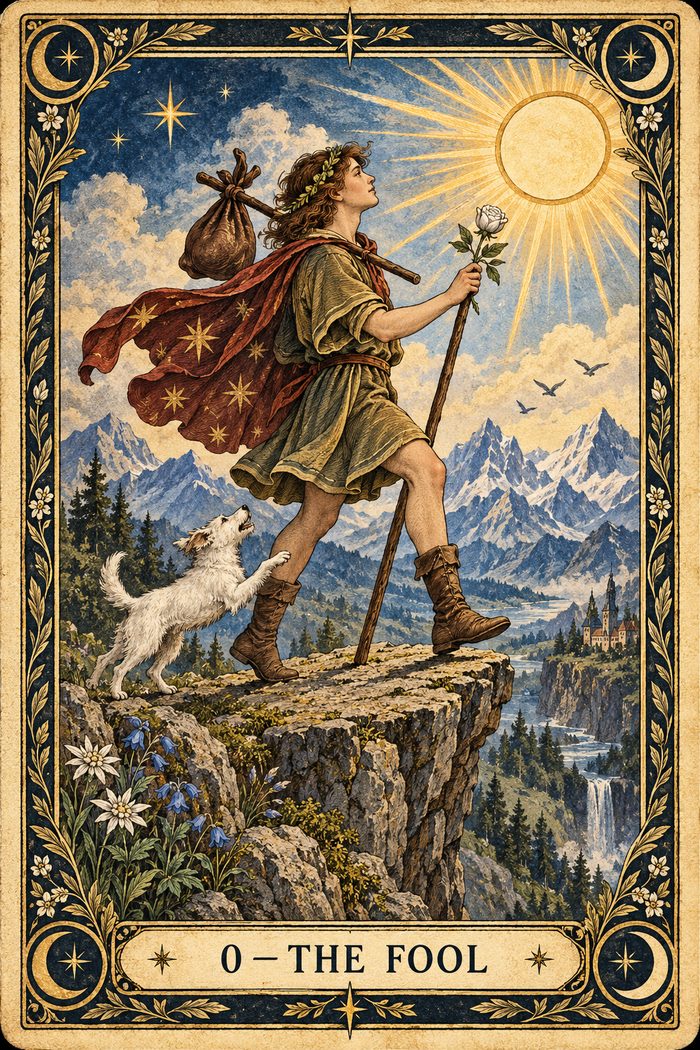
The Fool
Upright: A fresh start with no guarantees attached — you're stepping into something new before you've worked out every detail, and that's the point. The Fool asks you to trust the leap itself, not just the landing: innocence and spontaneity aren't naivety here, they're what let you move before overthinking talks you out of it.
Reversed: The same leap taken without looking — recklessness instead of trust, or a hopeful spontaneity that left you exposed to people who didn't have your best interest at heart. It can also mean hesitating right at the edge, unable to tell a real risk from a foolish one.
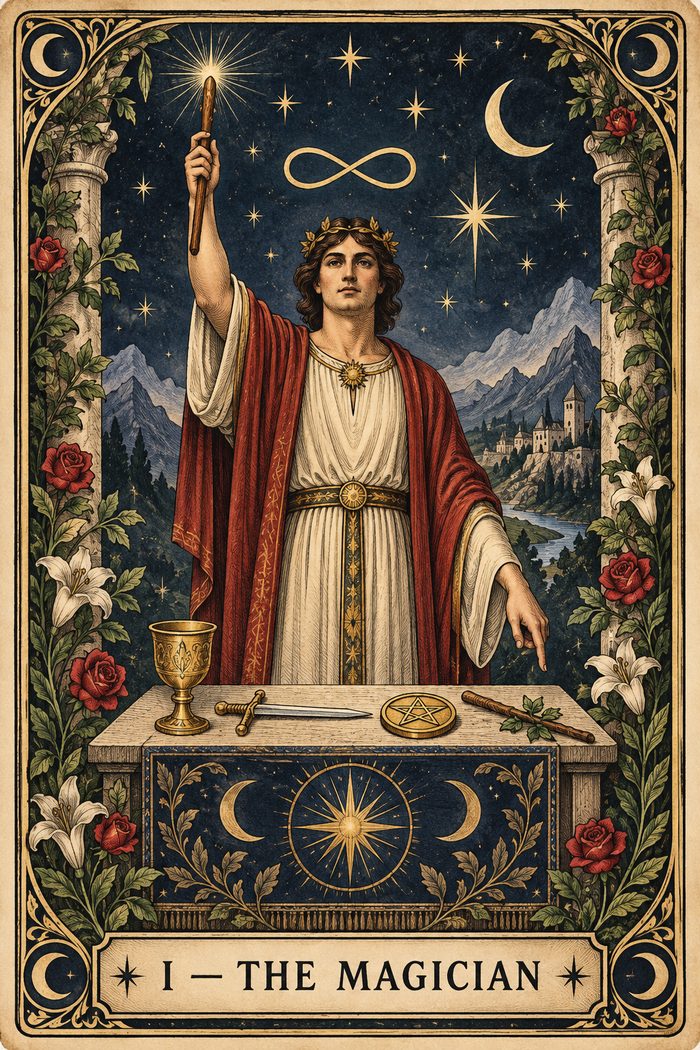
The Magician
Upright: Everything required is already in front of you — skill, timing, and the raw materials of the moment — and this card is permission to actually use them instead of waiting for more. It's the energy of turning an idea into something real through focused will, not luck.
Reversed: Talent and resources sitting unused, or turned toward manipulation instead of honest creation. It can also point to a plan that skipped the groundwork — all confidence, no follow-through.
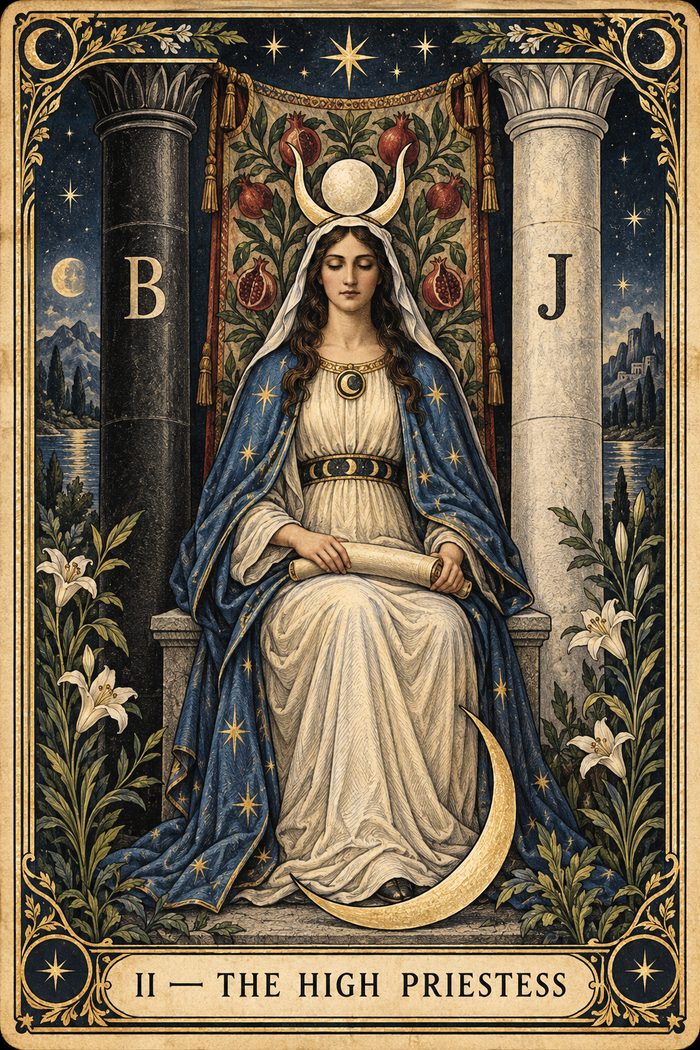
The High Priestess
Upright: A pull toward what you sense but can't yet explain — this card favors quiet knowing over loud certainty. Something is being revealed slowly, through dreams, gut feeling, or the space between words, and rushing it would only scare it back into hiding.
Reversed: A disconnect from your own inner voice, often because you've been told to distrust it, or because someone nearby is withholding the truth. Can also mean secrets kept for the wrong reasons rather than out of genuine discretion.
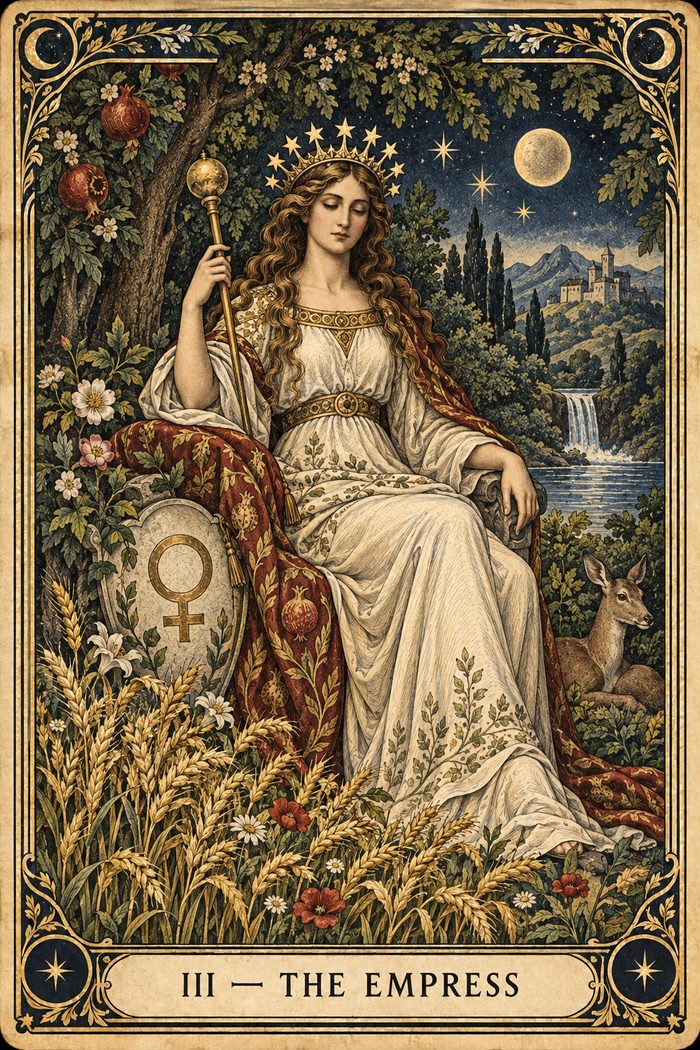
The Empress
Upright: A season of growth that asks for care, not force — nurturing a person, a project, or yourself the way you'd tend a garden. Creativity and abundance flow here because something is finally being given the attention it needed to flourish.
Reversed: Growth that's stalled from neglect, or a creative well that's run dry from giving too much of yourself away. Can also point to an unhealthy dependence — leaning on someone else to provide what you need to be providing for yourself.
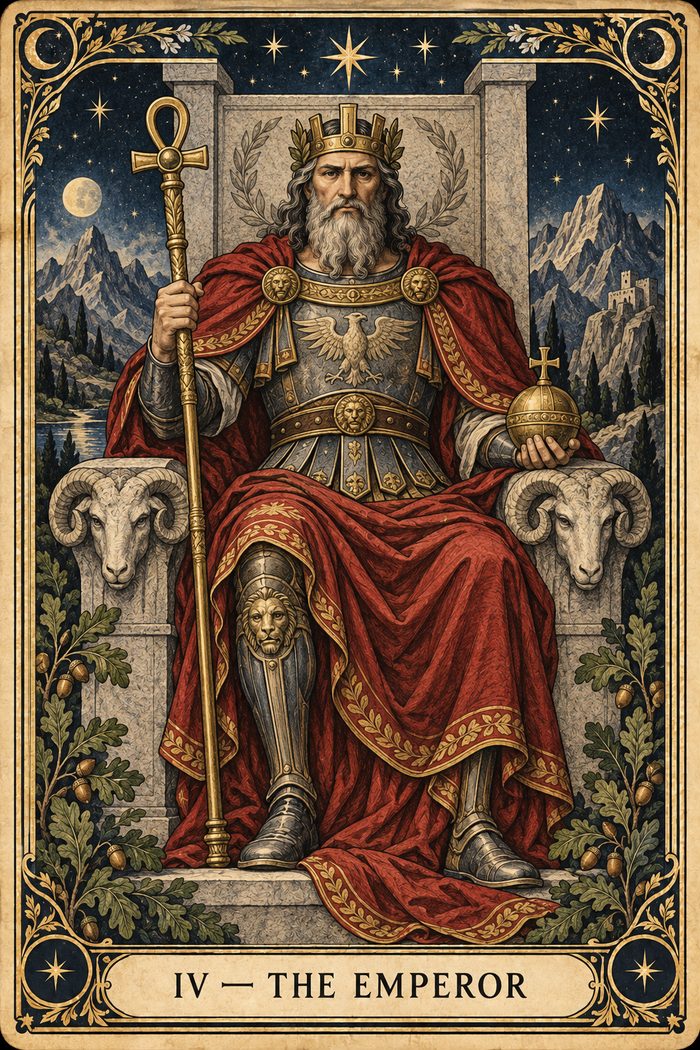
The Emperor
Upright: Order that actually holds something up — clear rules, a steady hand, a plan you can build a life on. This is authority used well: not control for its own sake, but the discipline that turns good intentions into something lasting.
Reversed: Structure gone brittle — control exercised for its own sake, or rules followed so rigidly they stop serving the people under them. Watch for someone (possibly you) confusing dominance with leadership.
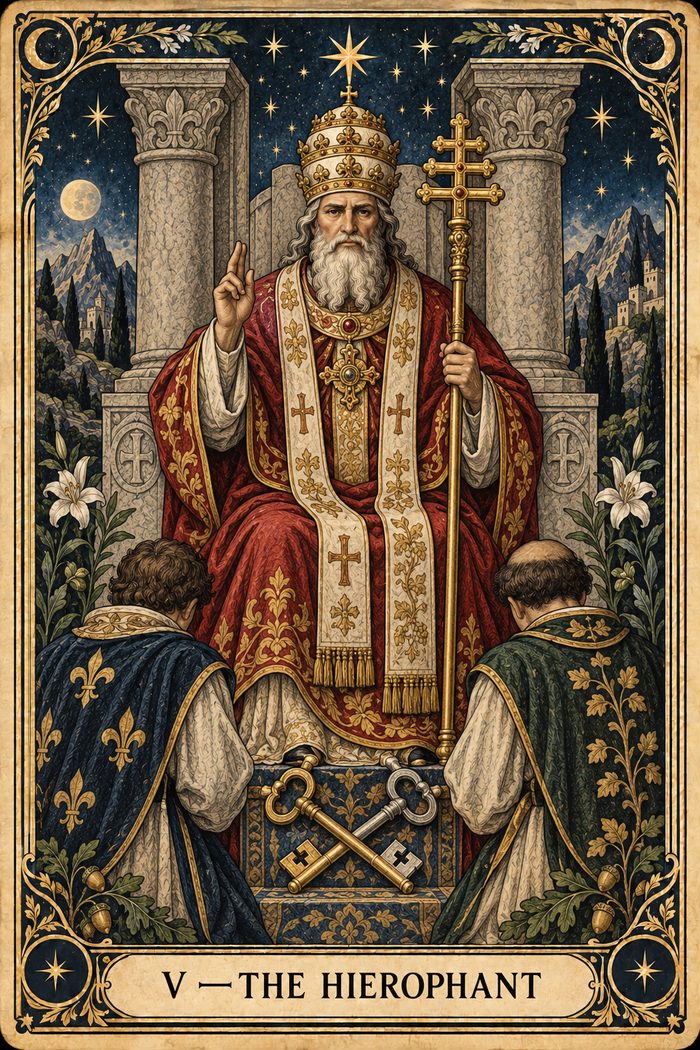
The Hierophant
Upright: Learning through an established path — a teacher, a tradition, a community with rules already worked out by people who came before you. There's real value here in choosing to belong to something larger, at least for now, rather than reinventing everything from scratch.
Reversed: Pushing back against an institution or belief system that no longer fits — sometimes healthy independence, sometimes rebellion for its own sake. Worth asking honestly which one this is before you burn the bridge.
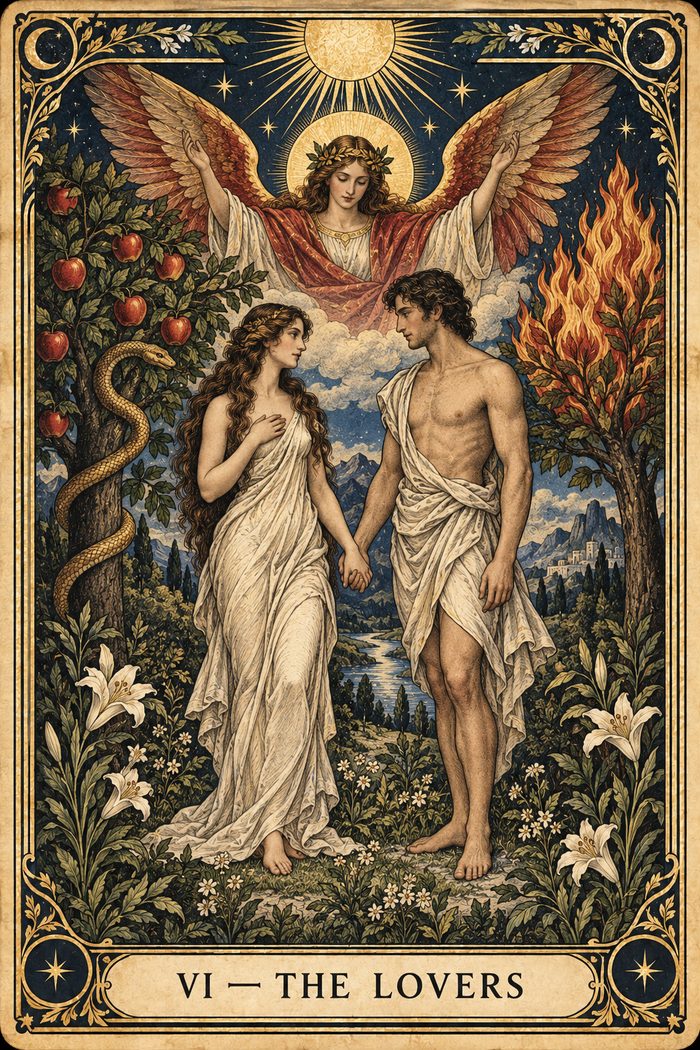
The Lovers
Upright: A real choice, usually about relationship or values, where both options are genuinely tempting and only one is truly yours. At its best this card is about alignment — a partnership or decision that actually reflects who you are, not who you think you should be.
Reversed: A relationship or choice pulling in two directions at once, or a decision you keep circling instead of making. Misalignment between what you say you want and what you're actually doing tends to show up here.
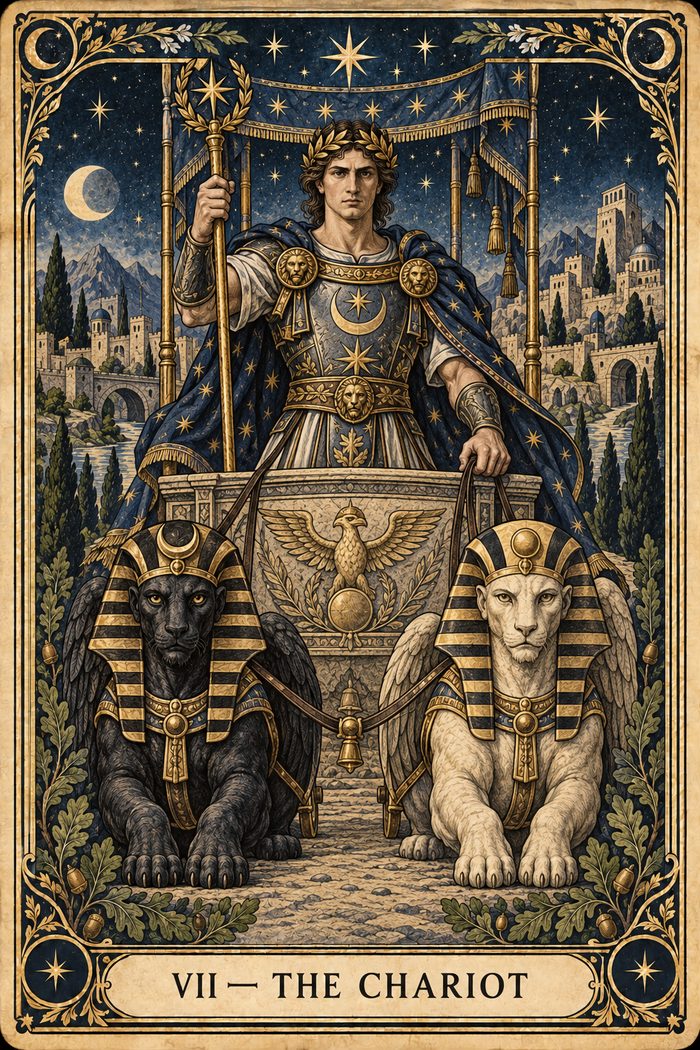
The Chariot
Upright: Forward motion through sheer will — two opposing forces held in check by someone who refuses to be pulled apart. Victory here comes from discipline and direction, not from things being easy.
Reversed: The same opposing forces, but now winning — momentum without direction, or willpower curdled into aggression. Can mean you're being pulled several ways at once with no one, including you, steering.
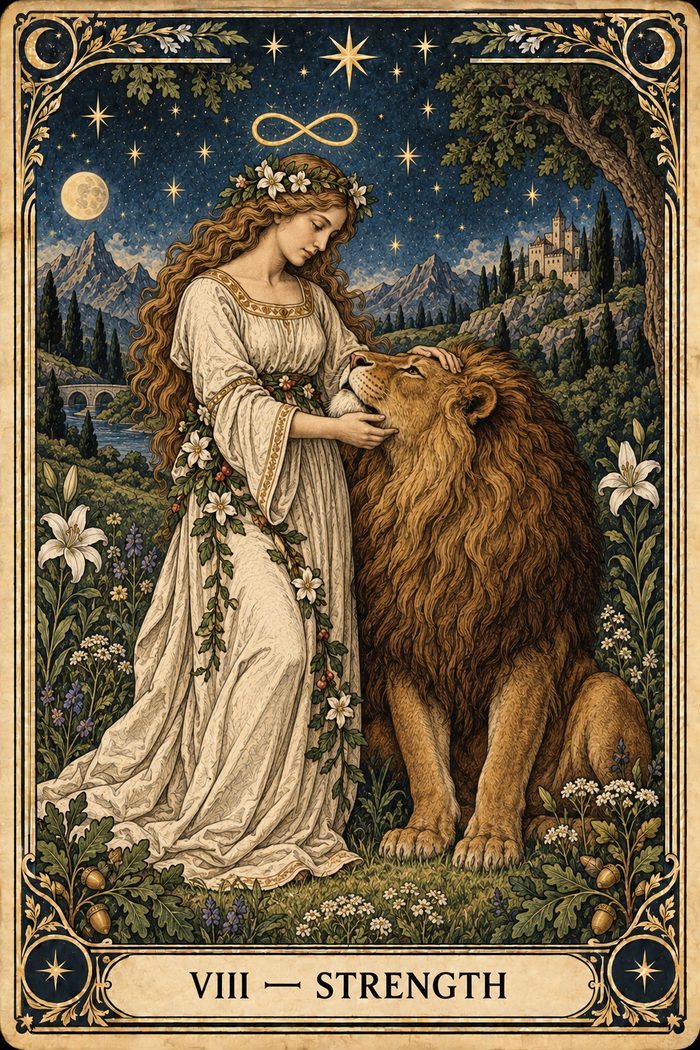
Strength
Upright: Real strength shown as patience rather than force — the traditional image is a woman calmly holding a lion's jaw, not wrestling it. This card says the gentler approach is also the stronger one: compassion, including toward yourself, tames what aggression only provokes.
Reversed: Confidence that's cracked, or strength used as raw force instead of patient control — pushing hard at something that actually needed a gentler hand. Self-doubt can creep in here even when you have more capability than you're giving yourself credit for.
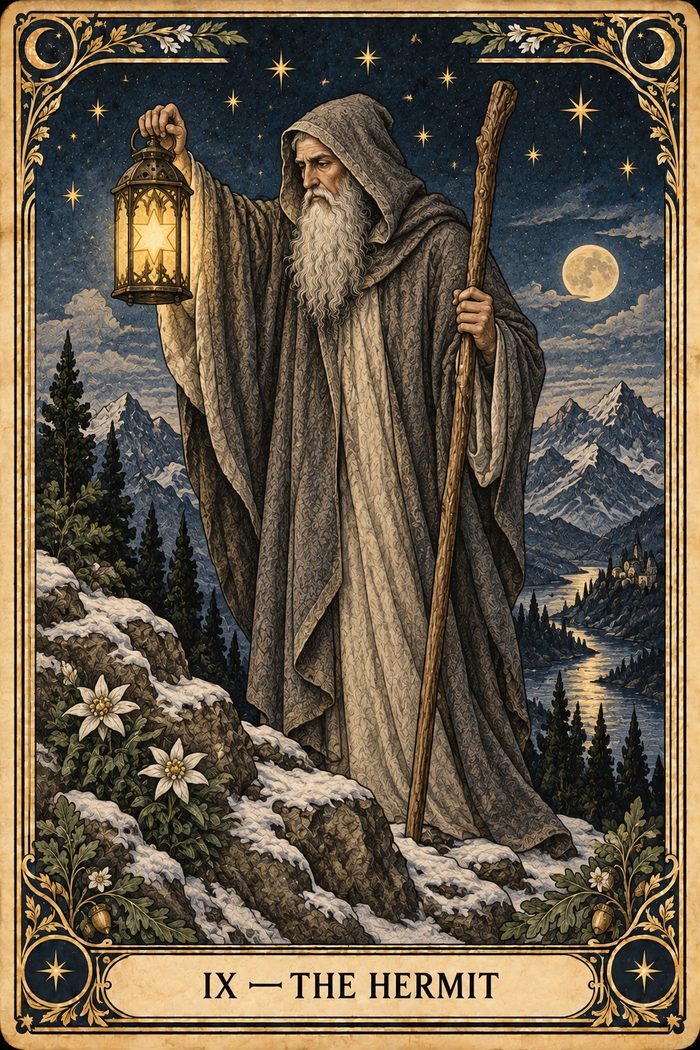
The Hermit
Upright: A deliberate step back from the noise to hear your own thinking clearly — solitude chosen, not imposed. The Hermit's lantern lights only a few steps ahead, which is the point: you don't need the whole path, just enough light for the next part.
Reversed: Solitude that's tipped into isolation — withdrawing from people who could actually help, or hiding from a question you'd rather not sit with. Worth checking whether you're recharging alone or just avoiding something.
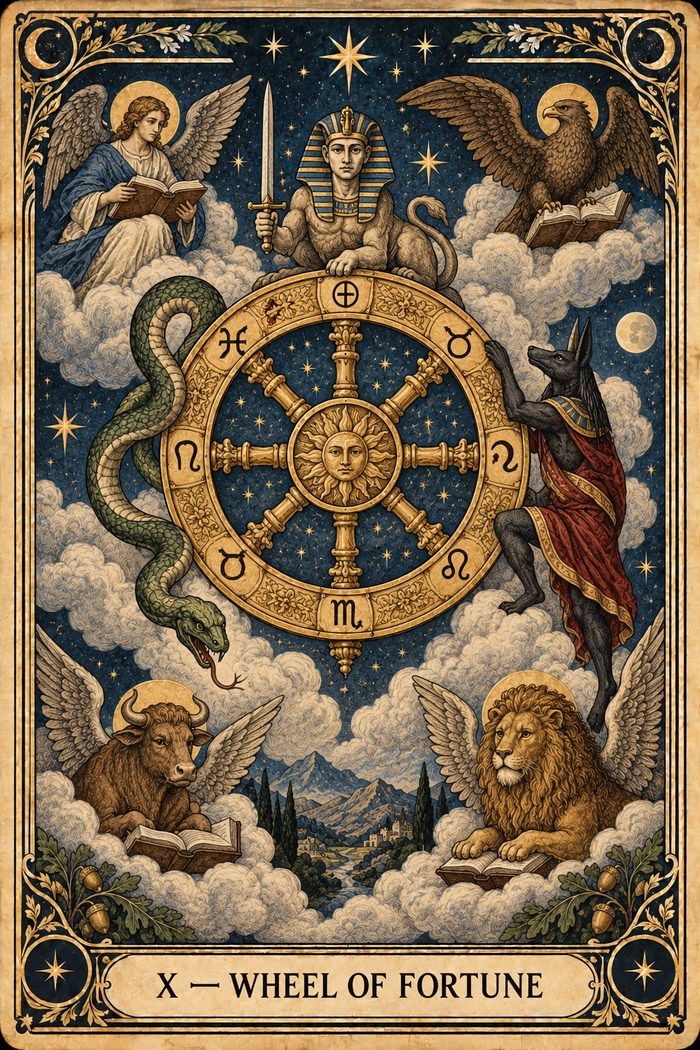
Wheel of Fortune
Upright: A shift arriving on its own timeline, for better or worse — the kind of turning point you didn't engineer and can't fully control. This card is a reminder that change is cyclical rather than personal: what's rising will eventually fall, and what's fallen will rise again.
Reversed: Fighting a change that's already underway, or feeling like the timing is working against you no matter what you do. Sometimes it just means a delay before the cycle turns your way again.
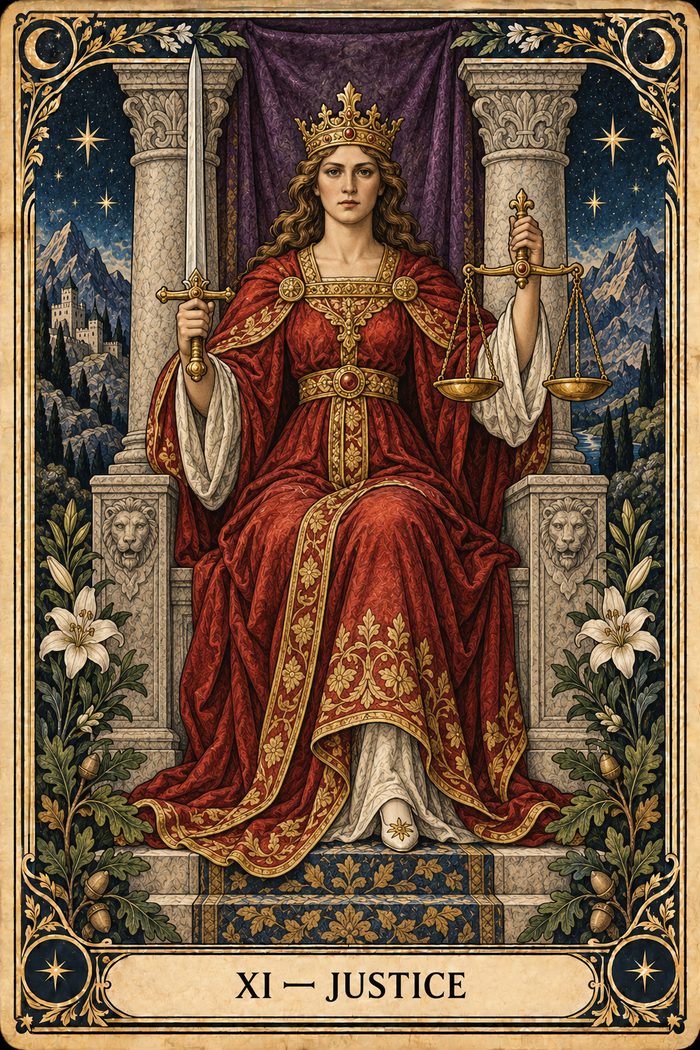
Justice
Upright: A situation where the truth matters and consequences are proportionate — decisions made with clear eyes rather than emotion or bias. What you've put in is coming back to you now, in a fairly straight line.
Reversed: An imbalance that hasn't been corrected — dishonesty going unchallenged, or someone (possibly you) trying to dodge a consequence that's rightfully theirs. Can also point to a legal or official matter that isn't resolving cleanly.
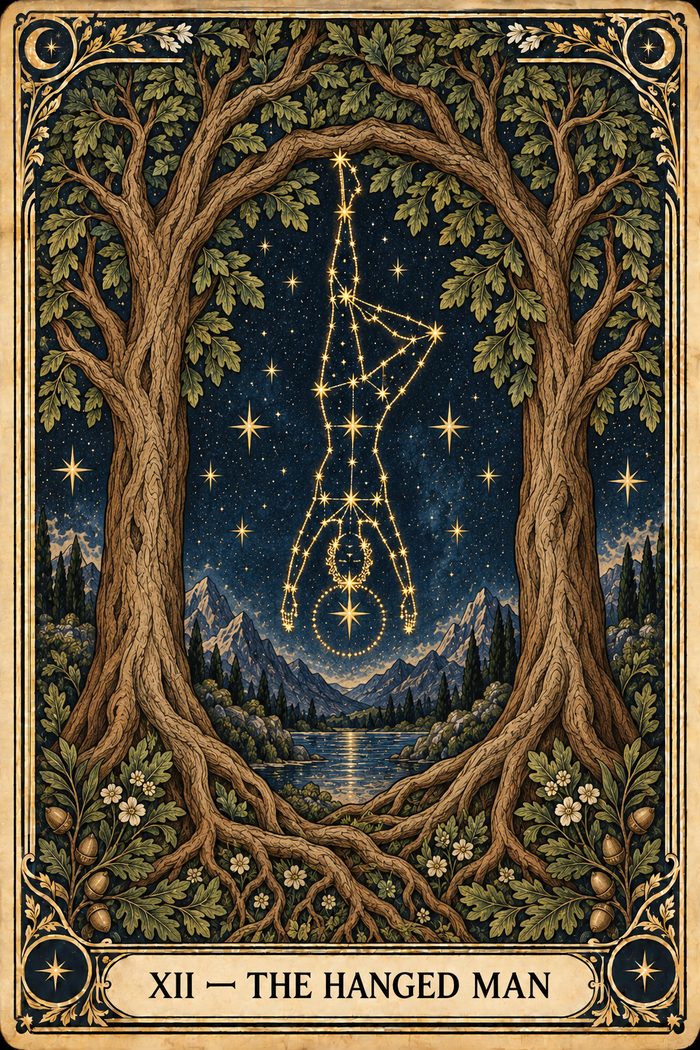
The Hanged Man
Upright: A deliberate pause, not a defeat — hanging suspended long enough to see the situation from an angle you couldn't reach while rushing forward. Sometimes the most useful thing you can do is stop pushing and let a new view arrive on its own.
Reversed: A pause that's turned into stalling — delay for its own sake, or resisting a sacrifice the situation genuinely calls for. Ask what you're actually avoiding by staying suspended.
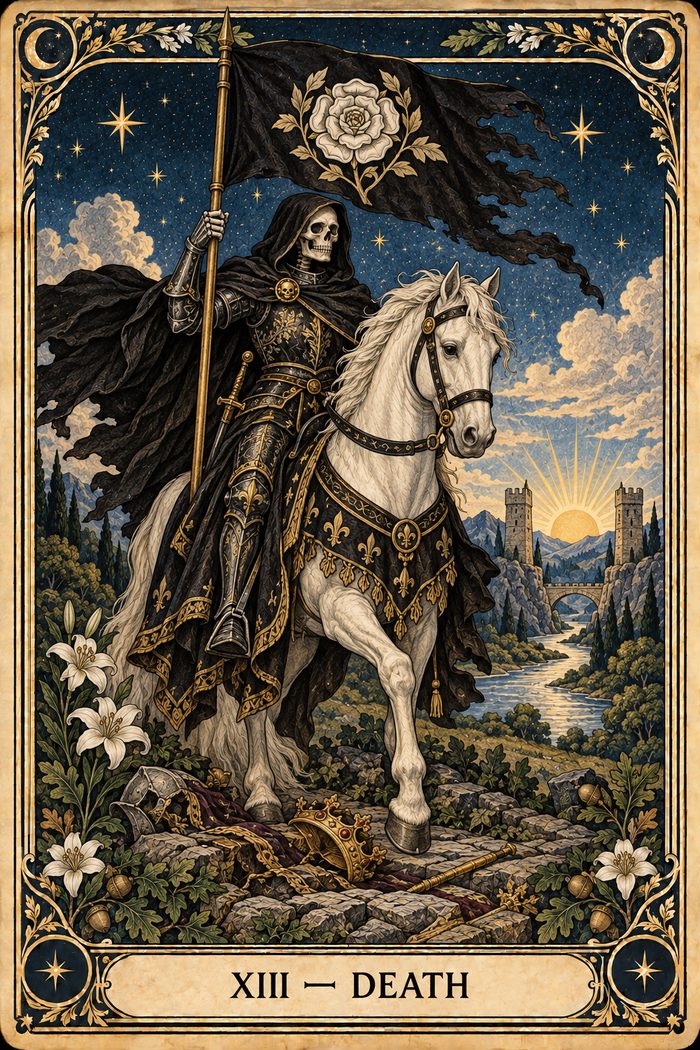
Death
Upright: An ending that clears space for something else — rarely literal, almost always transformation: a phase, identity, or relationship that has run its full course. Resisting it only prolongs the discomfort; the new thing can't arrive until the old one is actually let go.
Reversed: Holding on to something that's already over, out of fear rather than genuine hope. Stagnation here usually isn't peace — it's an ending being delayed at real cost to whatever wants to come next.
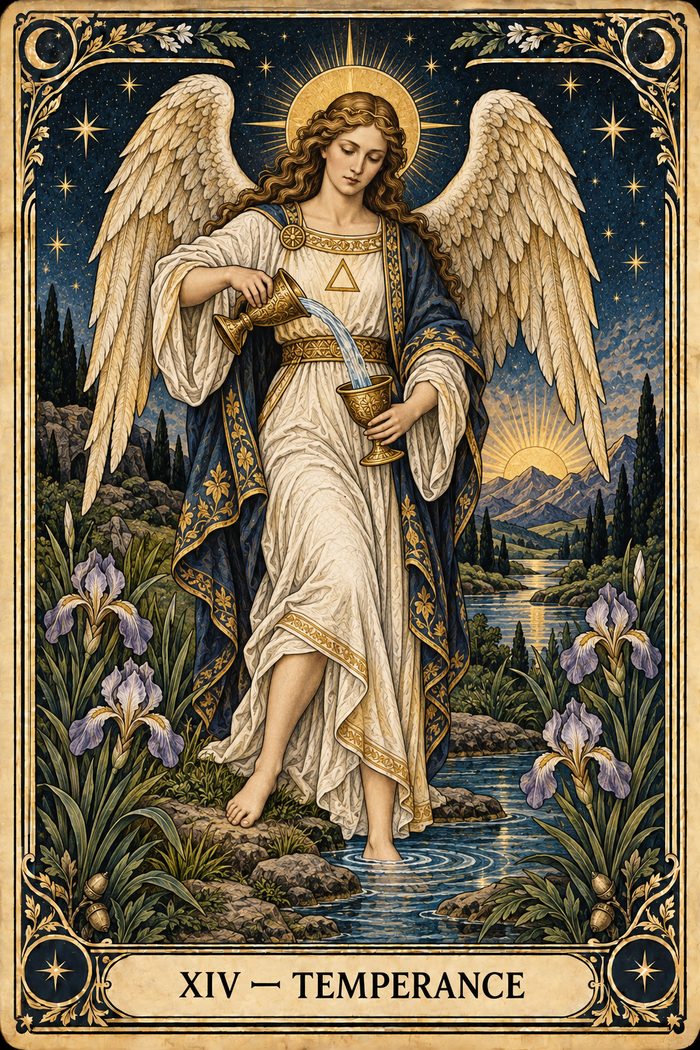
Temperance
Upright: Two things that don't obviously belong together, blended patiently until they do — the traditional image is an angel pouring water between two cups without spilling a drop. This card rewards moderation and slow integration over dramatic, all-or-nothing moves.
Reversed: Overcorrection in one direction — too much of something, not enough patience to let a blend settle properly. Impatience here tends to spill exactly what Temperance, upright, manages to hold steady.
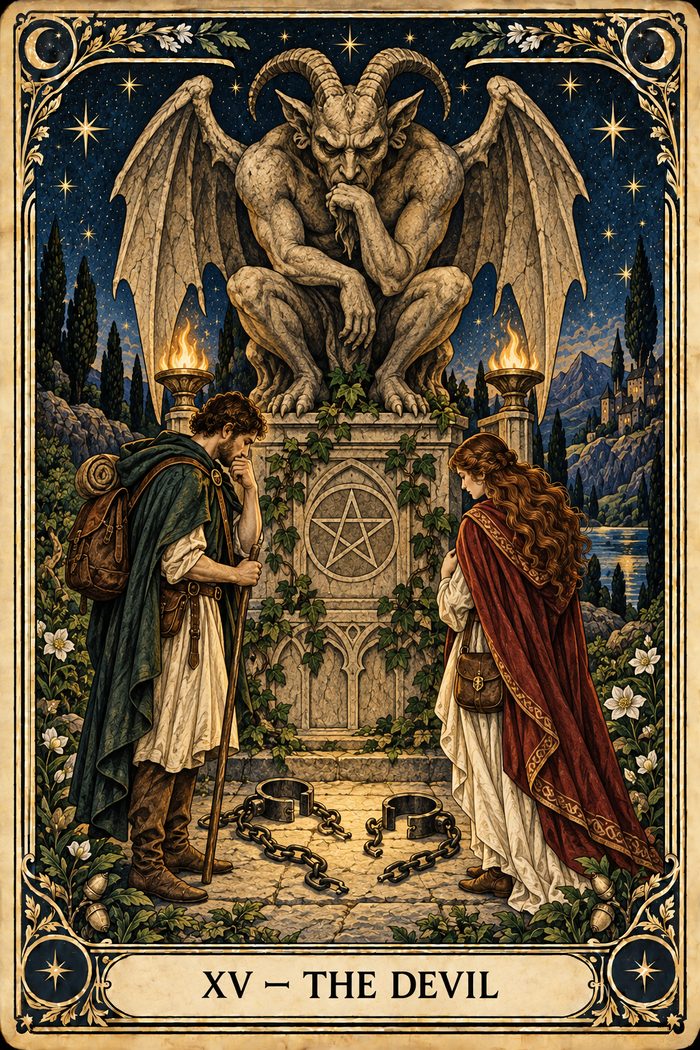
The Devil
Upright: A pattern, habit, or relationship that has real hold over you — the chains in the traditional image are loose enough to slip off, which is the uncomfortable part: the restriction is at least partly self-chosen. Temptation here is honest about what it costs, even when it's hard to walk away from.
Reversed: The first real move toward breaking a hold that's had you for a while — naming a pattern honestly, including one that might qualify as addiction, rather than continuing to explain it away. Reclaiming power starts with admitting the chains were never as fixed as they felt.
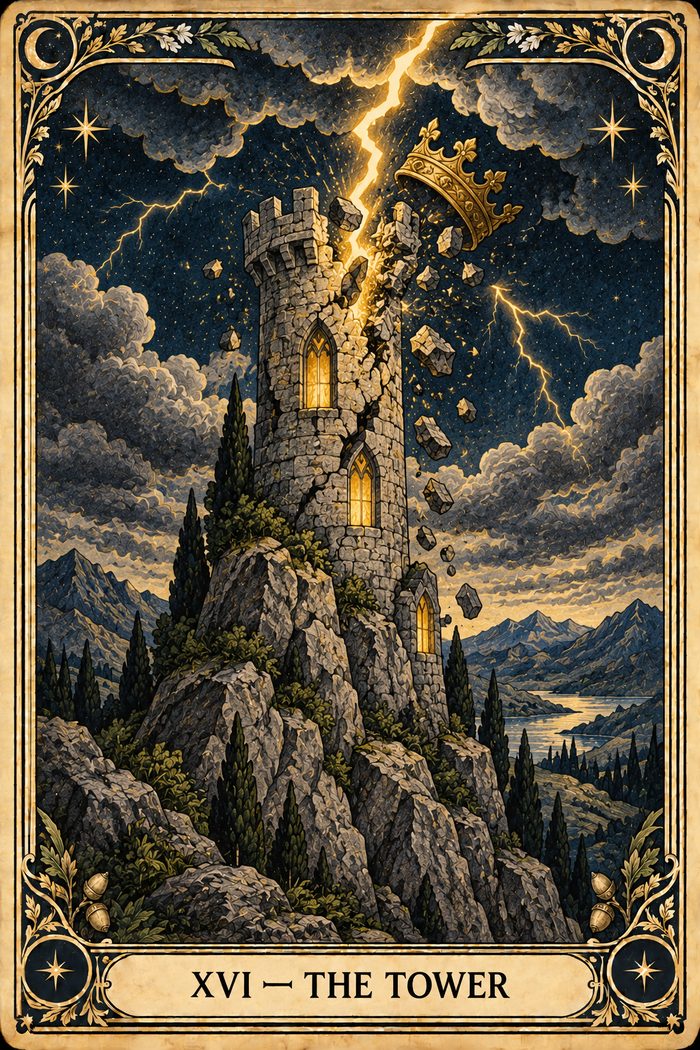
The Tower
Upright: A sudden, often unwelcome collapse of something that was never as stable as it looked — a belief, a relationship, a plan built on a shaky foundation. It's disruptive, but it's also honest: the Tower only falls when it needed to.
Reversed: A collapse narrowly avoided, or one that's simply been delayed rather than prevented. Can also mean living in quiet dread of a change you sense is coming, which is its own kind of exhausting.
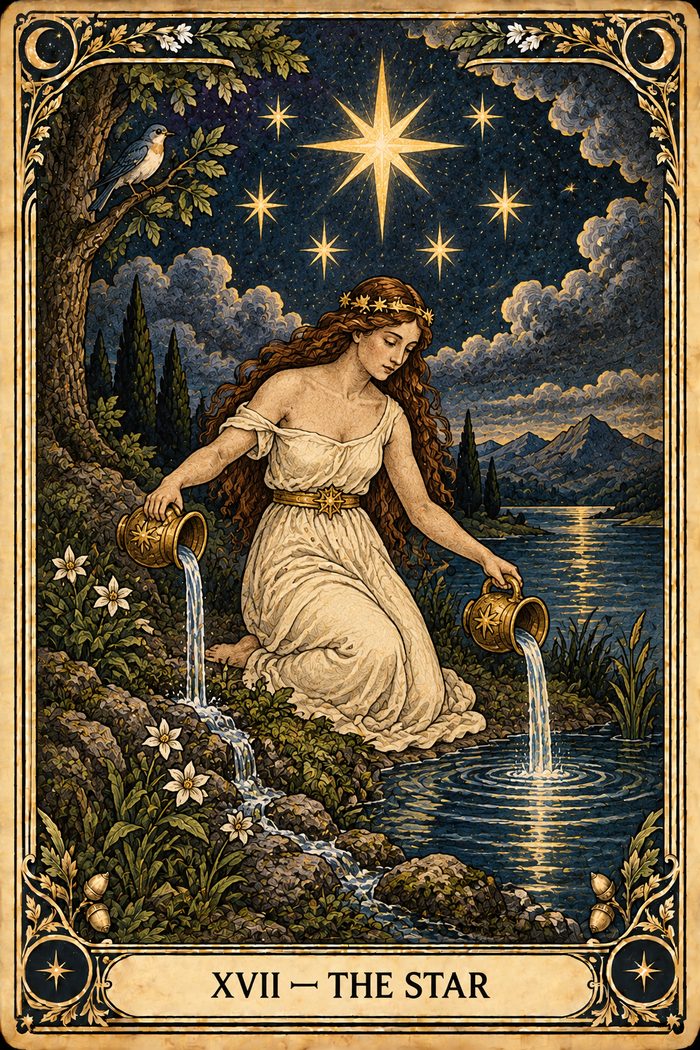
The Star
Upright: Quiet hope returning after a hard stretch — not loud celebration, just the sense that things are survivable again. This card follows the Tower's collapse for a reason: healing tends to arrive gently, once the wreckage has finally settled.
Reversed: Hope that feels out of reach, or a disconnection from whatever usually sustains you — faith, purpose, a sense that things improve. Worth treating gently rather than pushing through; despair like this tends to need patience more than force.

The Moon
Upright: A stretch where things aren't fully clear, and logic alone won't get you there — this is intuition's territory, even when it feels unsettling. Not everything needs to be resolved tonight; some things only make sense in daylight, later.
Reversed: The fog beginning to lift — a truth surfacing that fear had kept buried, or a confusing situation finally starting to make sense. Relief here comes gradually, not all at once.
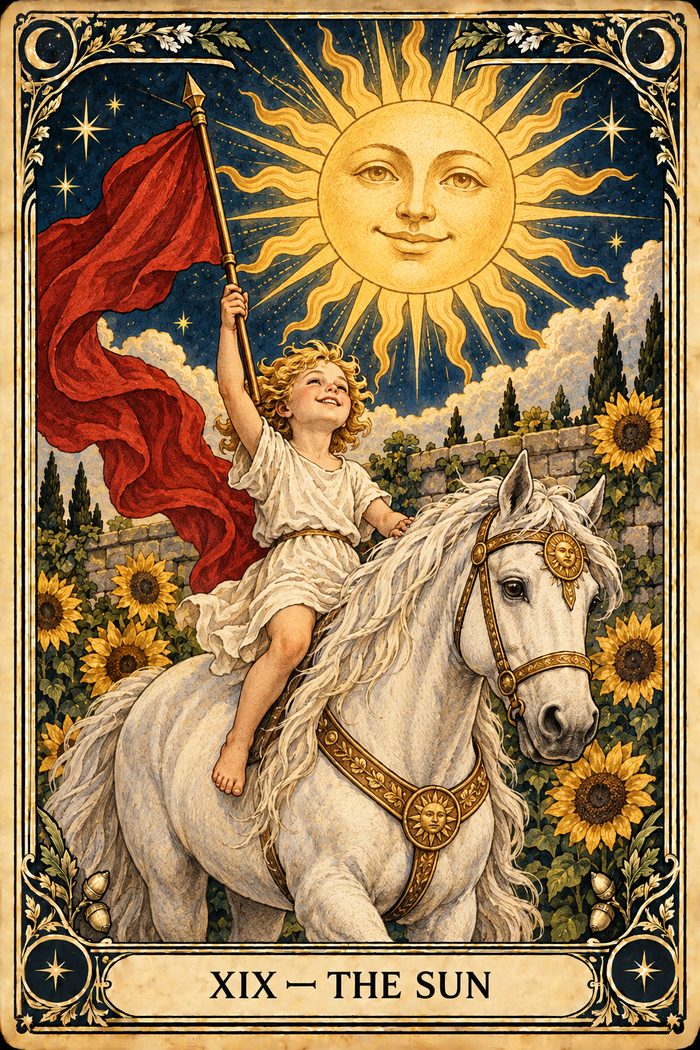
The Sun
Upright: Straightforward good fortune — clarity, energy, and a warmth that doesn't come with a hidden cost. Of all 78 cards this is one of the most reliably positive: enjoy it without waiting for the other shoe to drop.
Reversed: The same warmth, just delayed or temporarily clouded — a setback that's genuinely minor even if it doesn't feel that way today. Can also mean optimism that's outpaced the facts a little.
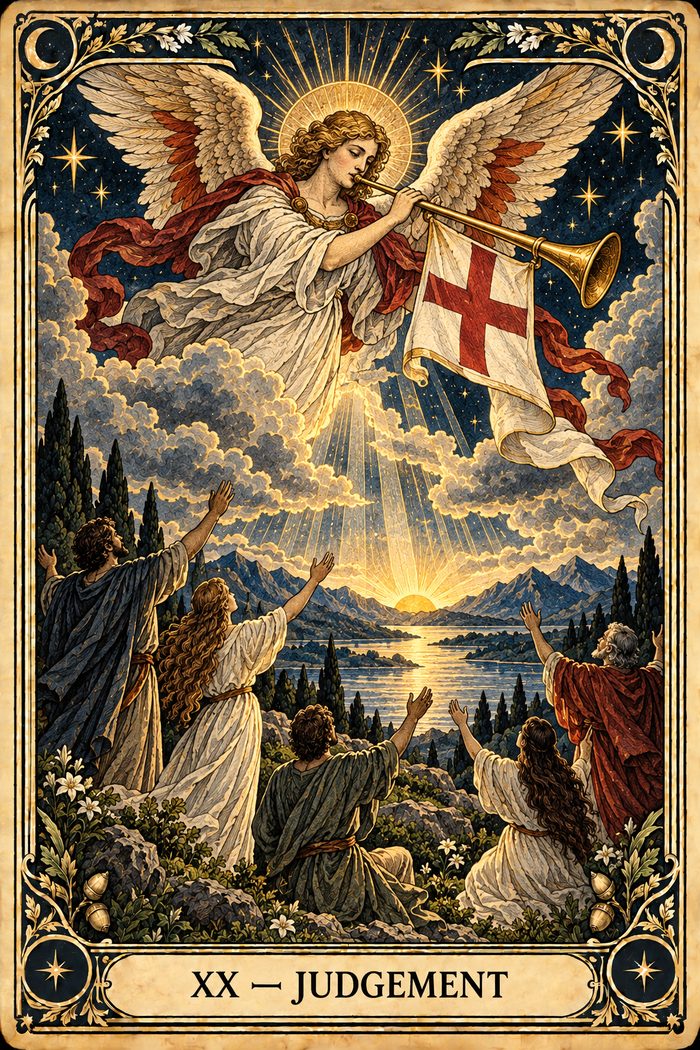
Judgement
Upright: A moment of honest reckoning — looking back at where you've been with clear eyes, and hearing a call toward something that matters more. This card is about waking up to a bigger picture, not punishment for what came before.
Reversed: A call you're aware of but haven't answered, or self-judgment so harsh it's blocking the honest reckoning this card is actually offering. Often the work here is softening the inner voice enough to hear it clearly.
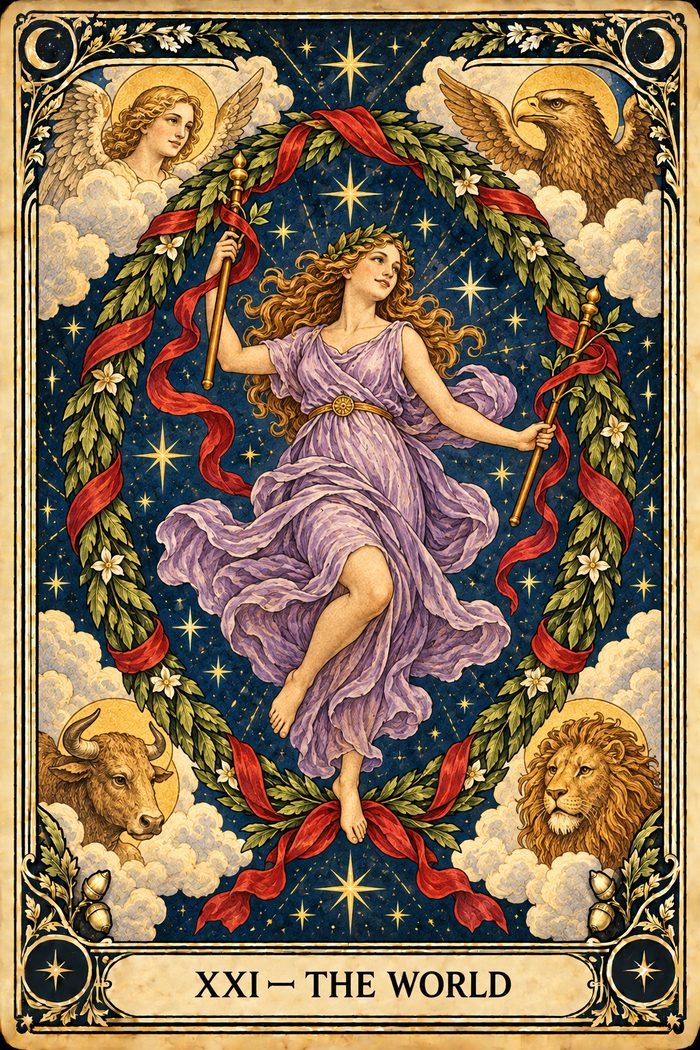
The World
Upright: A cycle brought all the way to completion — not just finished, but integrated, so the lessons actually travel with you into whatever comes next. This is the deck's closing card for a reason: it marks an ending that's fully earned.
Reversed: Something left just short of done, or completion that's being delayed by looking for outside approval instead of recognizing the achievement yourself. Close, but not quite closed yet.
The complete Minor Arcana
All 56 cards across the four suits — search by name or filter by suit.
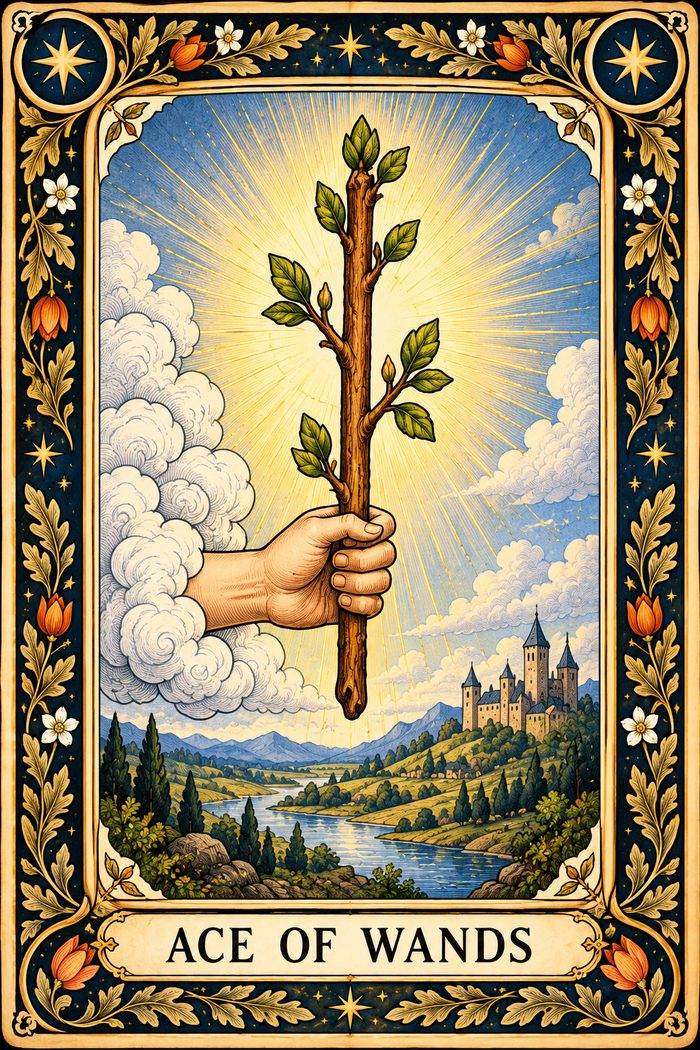
Ace of Wands
Upright: A first flicker of creative fire — an idea that arrives with real heat behind it, even if you don't yet know where it's going. This is permission to start the passion project before you've planned it all the way through.
Reversed: The spark hasn't caught yet — inspiration stalling before it becomes action, or energy with nowhere clear to go. Sometimes this just means the timing is early, not that the idea was wrong.
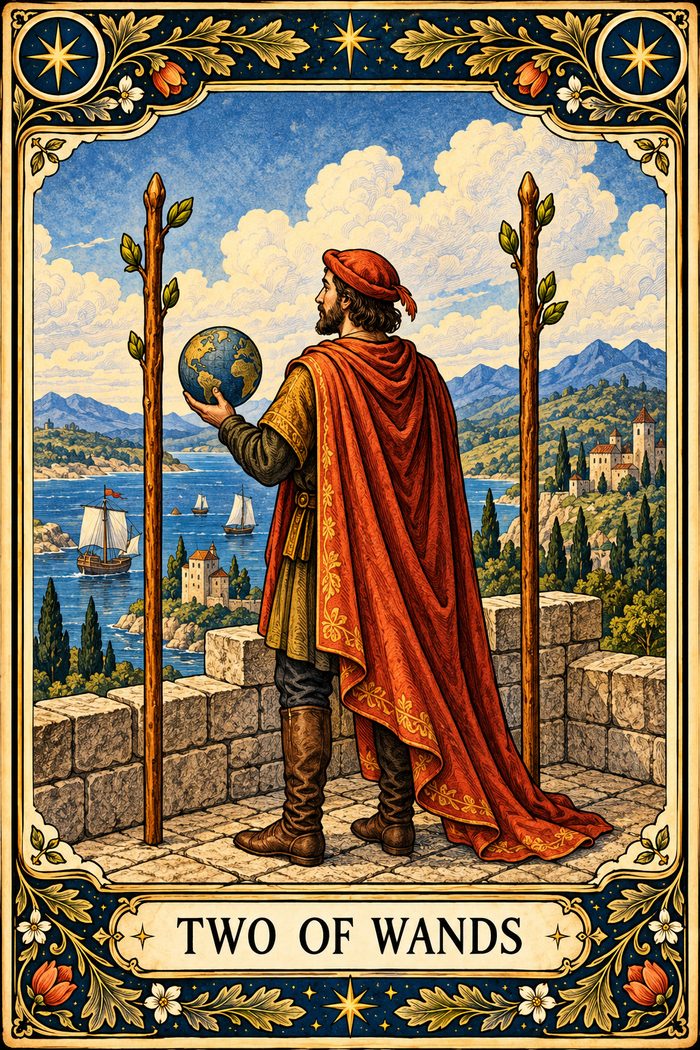
Two of Wands
Upright: Standing at the edge of what you started, looking out at the options ahead — the excitement of the Ace now needs an actual plan. This card rewards the deliberate pause: mapping the terrain before committing to a direction.
Reversed: Staying small out of fear of what's beyond the horizon, or circling the same options without choosing one. Playing it safe here usually costs more than the risk would have.
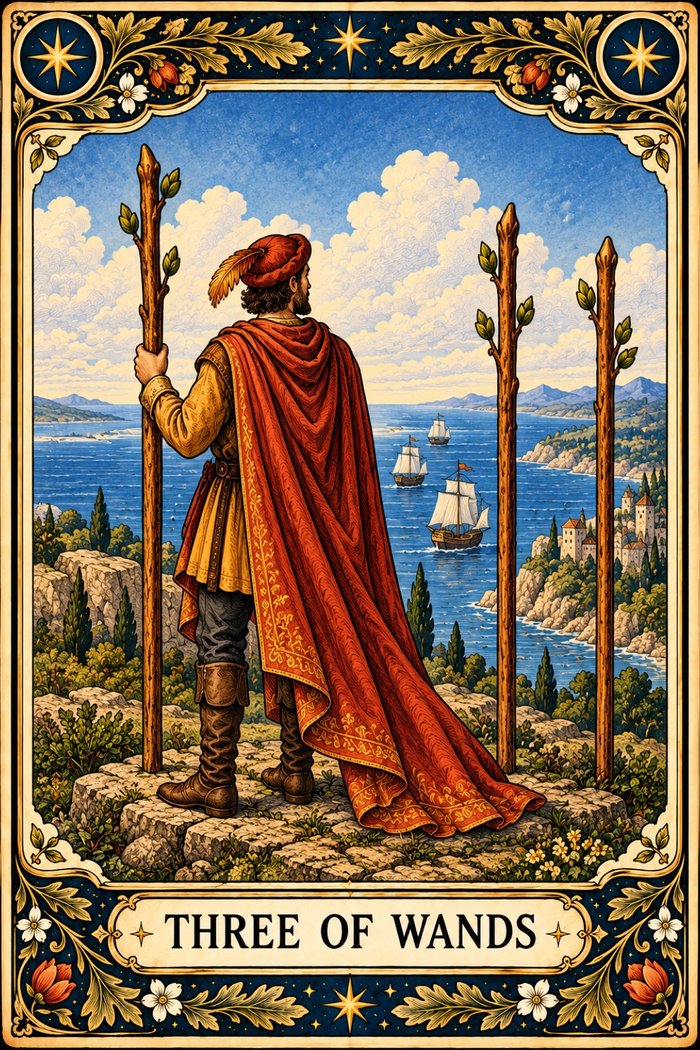
Three of Wands
Upright: Watching from the shore as something you set in motion sails out toward its results — the waiting itself is part of the work now. Foresight served you well; this is the patience that follows it.
Reversed: A plan hitting turbulence you didn't see coming — timelines slipping, results that aren't arriving on schedule. Frustrating, but rarely fatal to the larger plan.
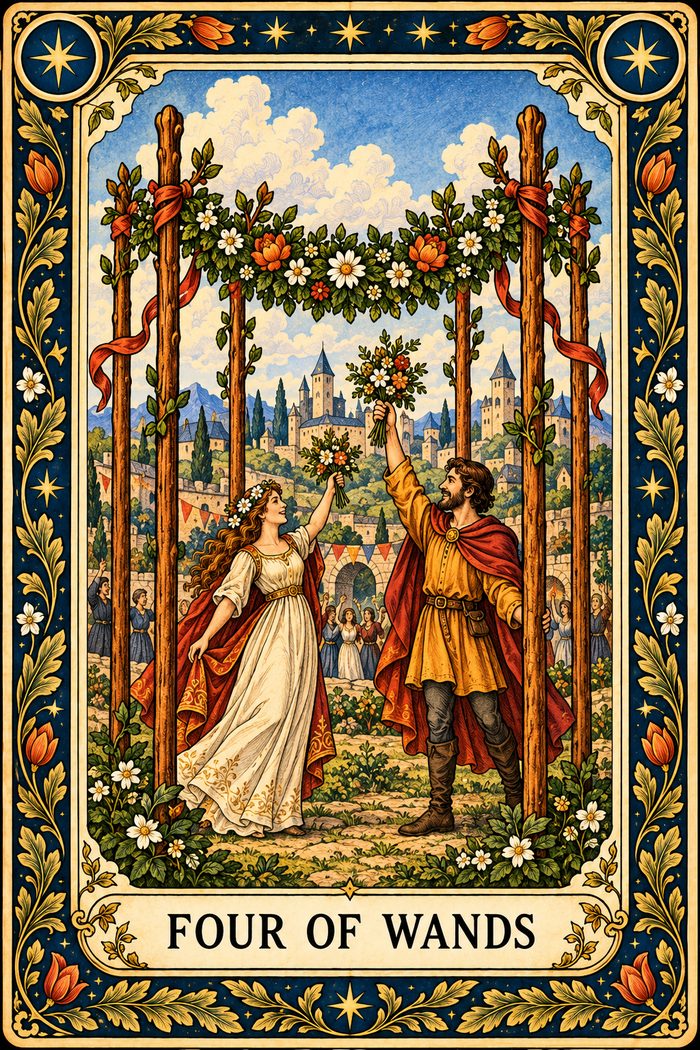
Four of Wands
Upright: A milestone worth actually stopping for — homecoming, a wedding, the kind of stability that deserves a party rather than a quiet nod. Enjoy this one; not every card asks you to.
Reversed: A celebration on hold, or a foundation that feels shakier than it should right when you needed it steady. Often marks a transition between one home base and the next.
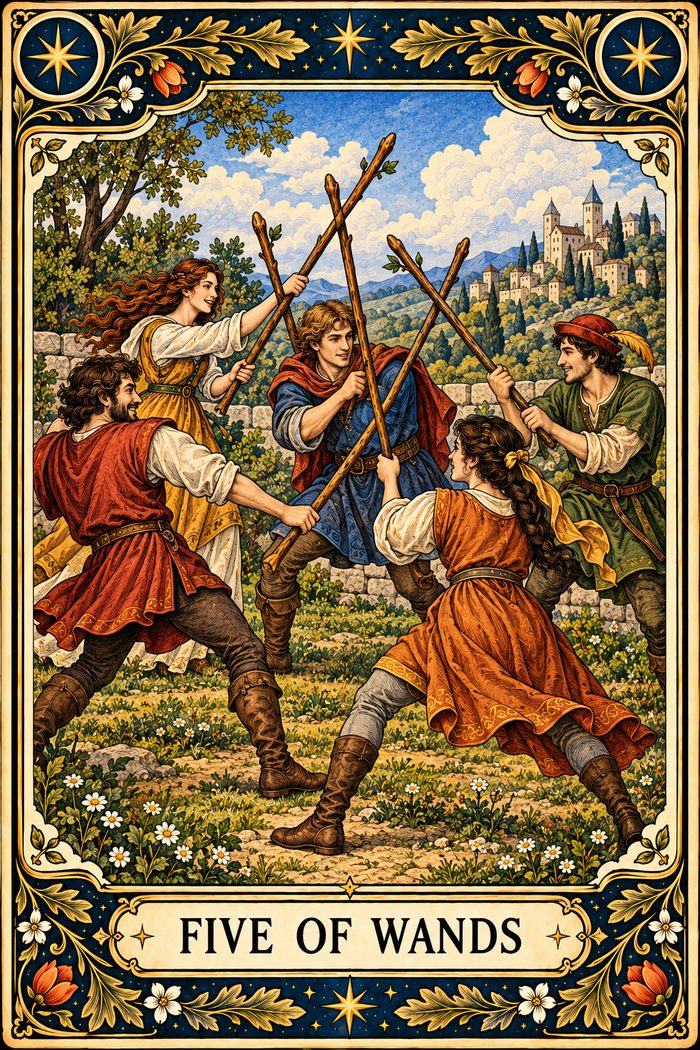
Five of Wands
Upright: A clash of energies or opinions that looks like conflict but is closer to competitive sparring — everyone talking over each other because everyone actually cares. Handled well, this friction sharpens ideas instead of ruining them.
Reversed: Conflict avoided rather than resolved, or the same struggle now happening inside you instead of out loud. Can also mean a long-running tension is finally starting to ease.
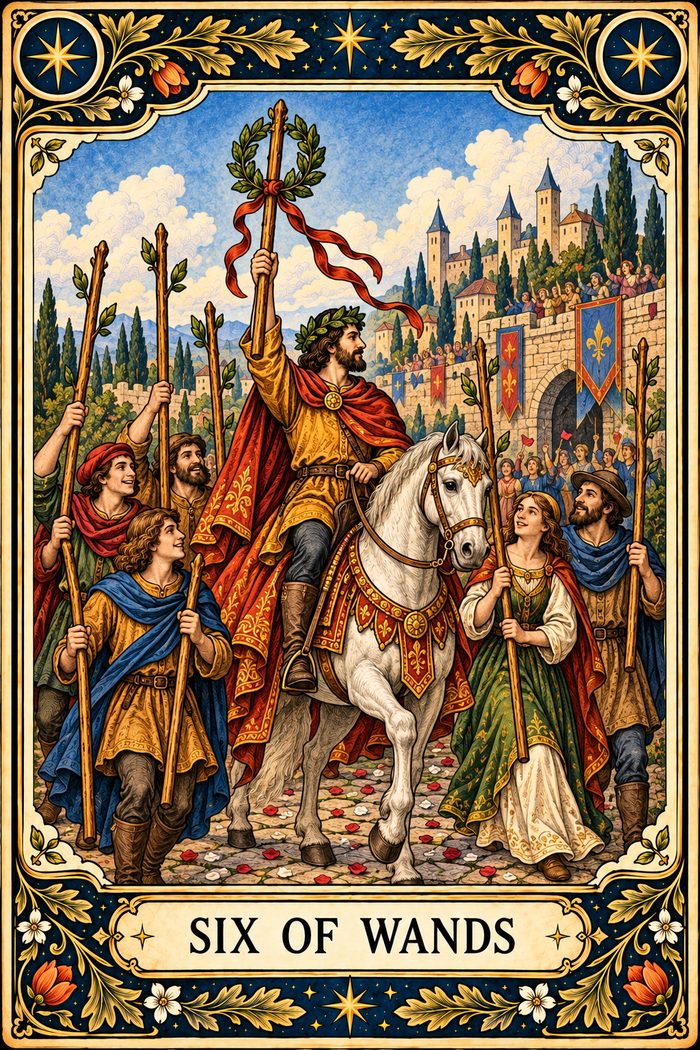
Six of Wands
Upright: A win people can actually see — recognition for effort that was real, not just self-congratulation. Let yourself take the credit here; you earned the parade.
Reversed: A win that happens quietly, without the applause you were hoping for, or pride that's tipped into needing everyone else to notice. Can also mean a public reputation taking an unexpected hit.
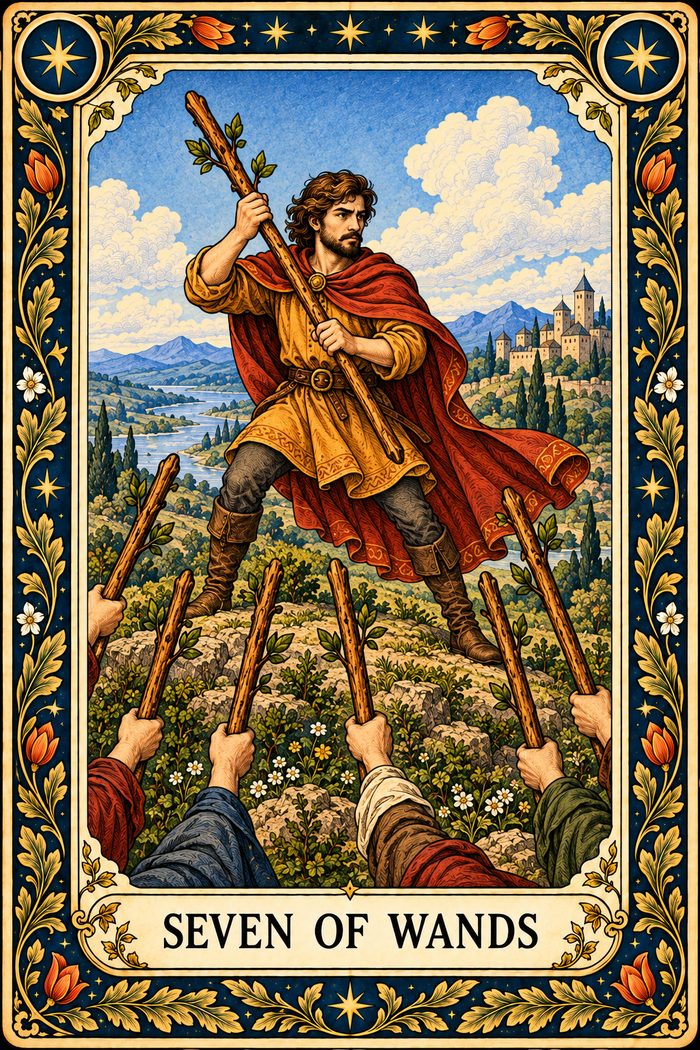
Seven of Wands
Upright: Holding a position while it's actively being challenged — not because you started the fight, but because backing down now would cost more than the fight itself. High ground is exhausting to defend, but you have it.
Reversed: The pressure finally outpacing your ability to hold the line — conceding ground you didn't want to give, or feeling attacked from more directions than you can defend at once.
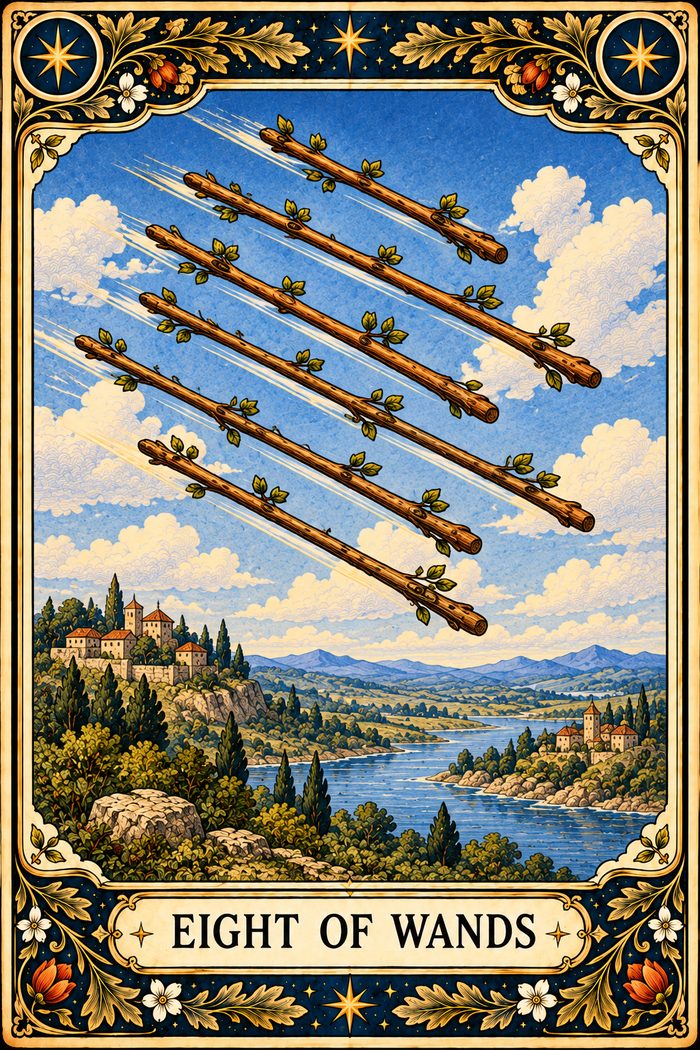
Eight of Wands
Upright: Everything suddenly moving at once — messages landing, plans accelerating, a long stretch of waiting abruptly over. Momentum is on your side; the main risk now is outrunning your own judgment.
Reversed: Momentum stalling right when it mattered most — a fast start losing steam, or news that keeps not arriving. The frustration is real, but it's usually a pause, not a stop.
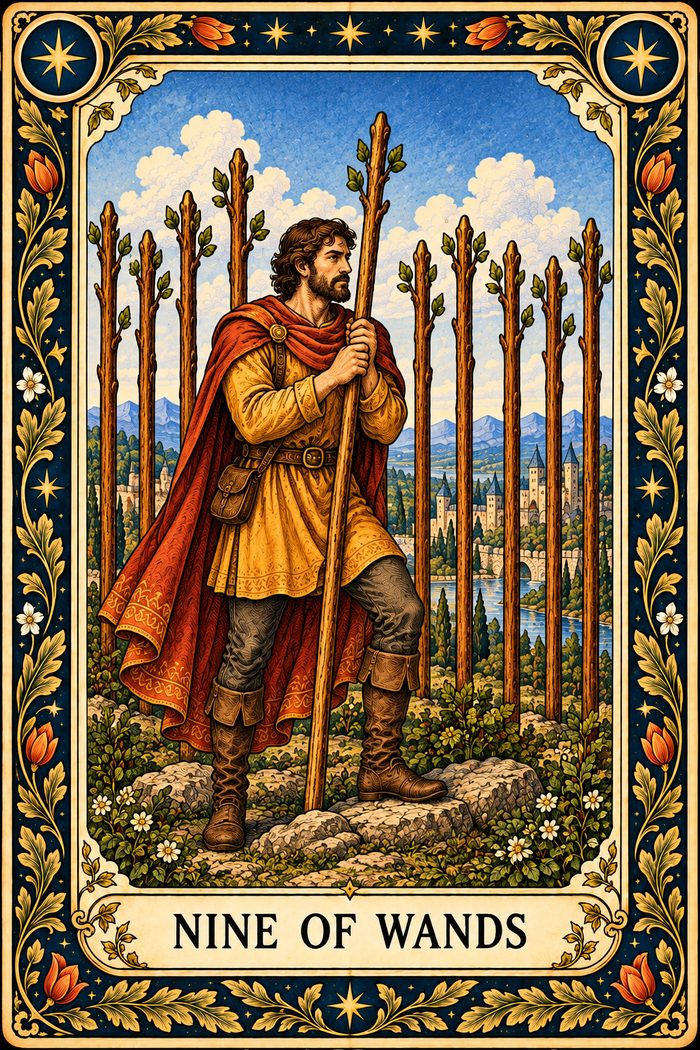
Nine of Wands
Upright: Standing bruised but upright, close enough to the end that stopping now would waste everything already survived. The wariness you're carrying was earned — just don't let it become a wall against help that's actually safe.
Reversed: Exhaustion that's crossed into burnout — defenses up against threats that may not even be there anymore. Rest isn't giving up; it's what lets you finish.
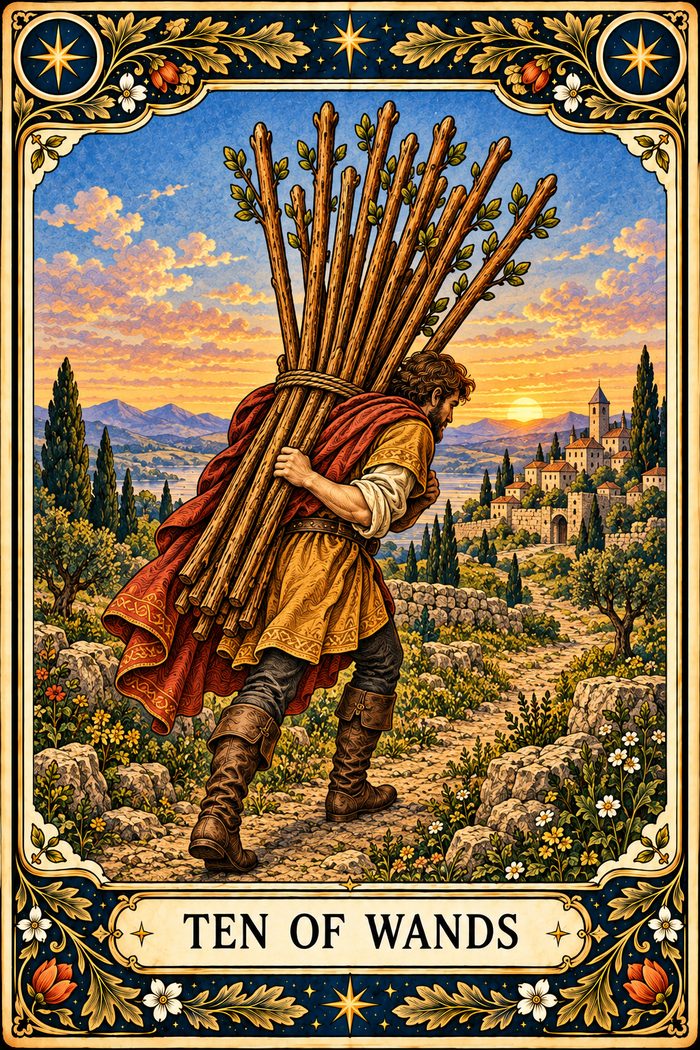
Ten of Wands
Upright: Carrying more than your fair share, arms full right at the point where the finish line is finally visible. The weight is real, but so is how close you are — the trick is not dropping it now.
Reversed: Finally setting down a burden you should have shared long ago, or — the less flattering read — quietly dodging responsibility that was actually yours to carry.
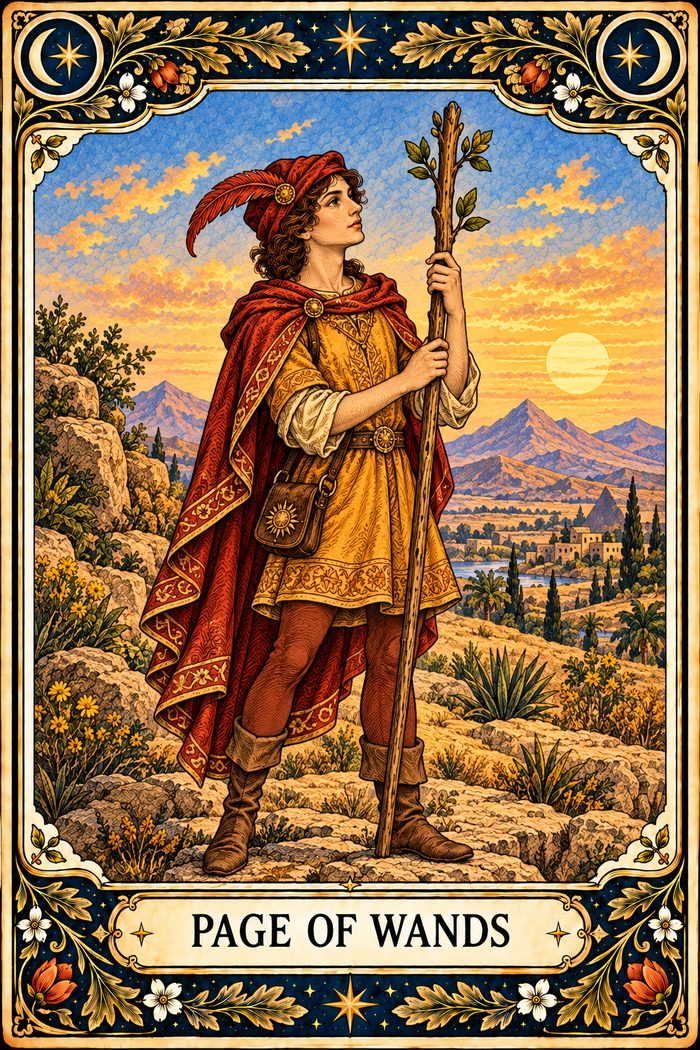
Page of Wands
Upright: A burst of enthusiasm for something brand new — an idea, an offer, a direction you haven't tried yet. It's untested and a little naive, and that's exactly its charm.
Reversed: Excitement that scatters before it becomes anything real — big talk about a dozen directions, follow-through on none of them yet.
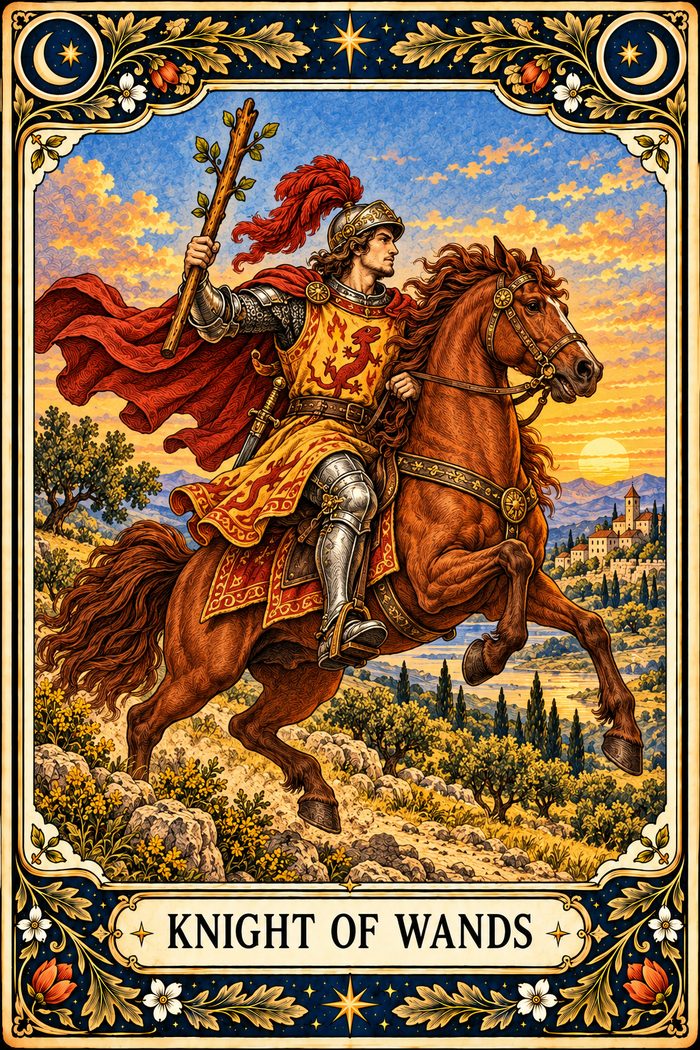
Knight of Wands
Upright: Moving fast and confidently toward a goal, energy running a little ahead of the plan. This card gets things started; it's not always the one that finishes them.
Reversed: Bold action that outran its own good sense — haste that became recklessness, or a promising start abandoned once the initial thrill wore off.
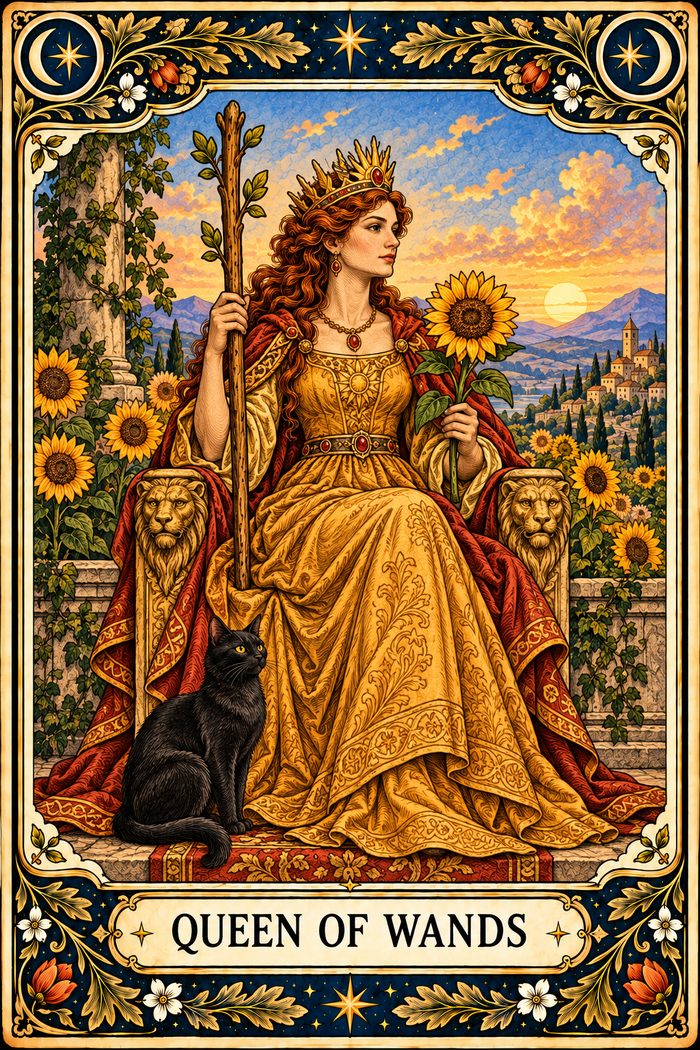
Queen of Wands
Upright: Warmth and confidence that don't need anyone's permission — a strong sense of self that draws people in rather than pushing them away. Independence here reads as magnetic, not standoffish.
Reversed: Confidence curdled into needing constant validation, or warmth that's turned brittle with jealousy. Usually points to self-doubt hiding underneath a bold front.
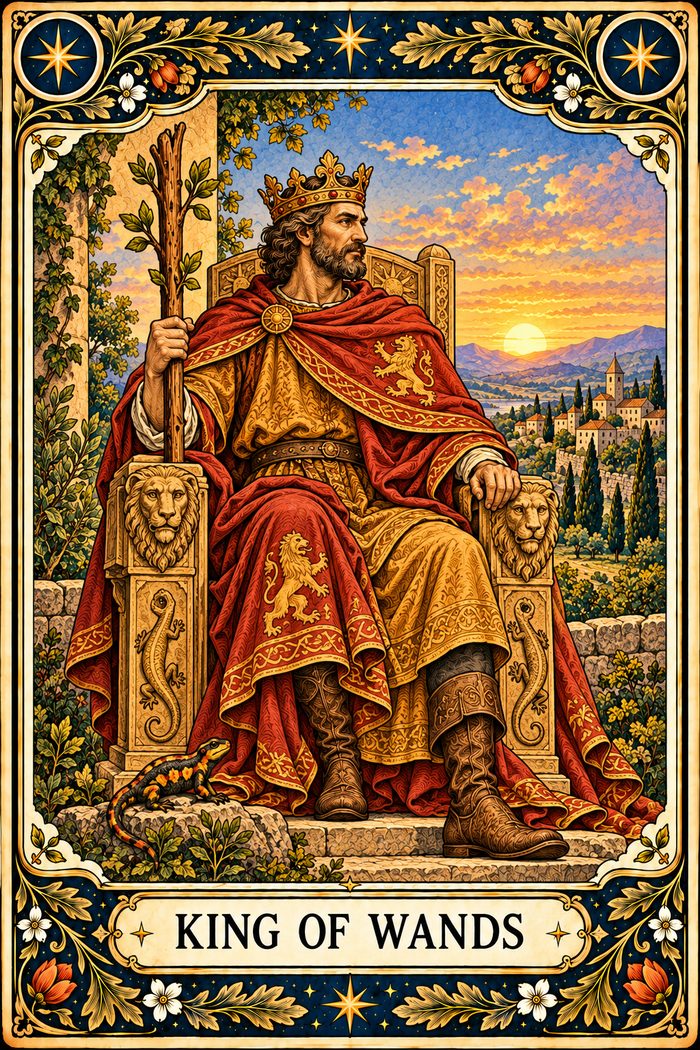
King of Wands
Upright: Leadership that people actually want to follow — a bold vision backed by the charisma and follow-through to make it real. This is command earned through presence, not title.
Reversed: Vision without patience — decisions made too fast, control exercised too harshly, an ego that's stopped listening to anyone else in the room.
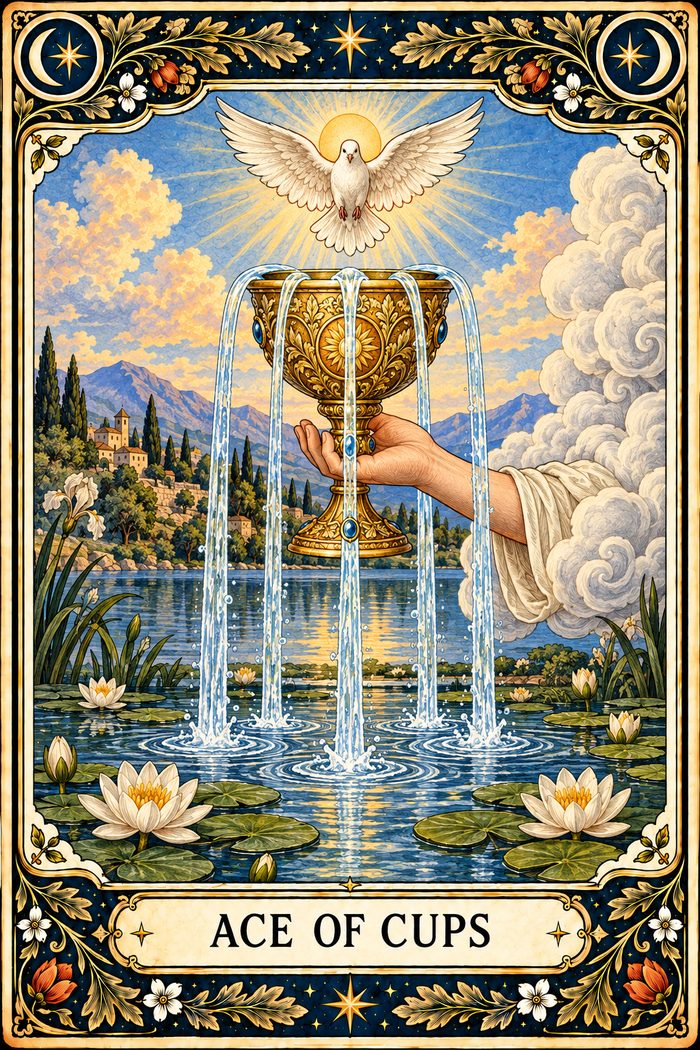
Ace of Cups
Upright: A heart opening back up — new love, new compassion, or simply the capacity to feel something fully again after a guarded stretch. This card overflows; let it.
Reversed: Feelings that are real but dammed up — love or connection that hasn't found its way out yet, or a heart that's not quite ready to be that open.
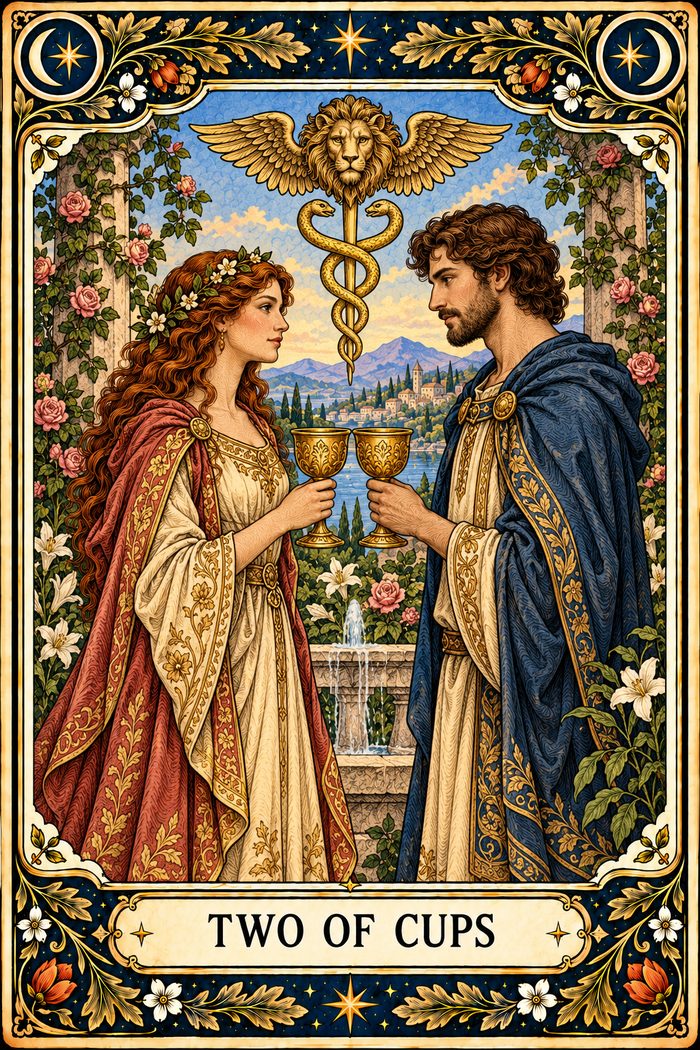
Two of Cups
Upright: A real meeting of two people — mutual attraction or partnership where both sides are actually showing up, not just one. This card is as much about friendship and business partnership as romance.
Reversed: A connection that's stopped being mutual — one person giving more than the other, or a bond that's quietly come apart.
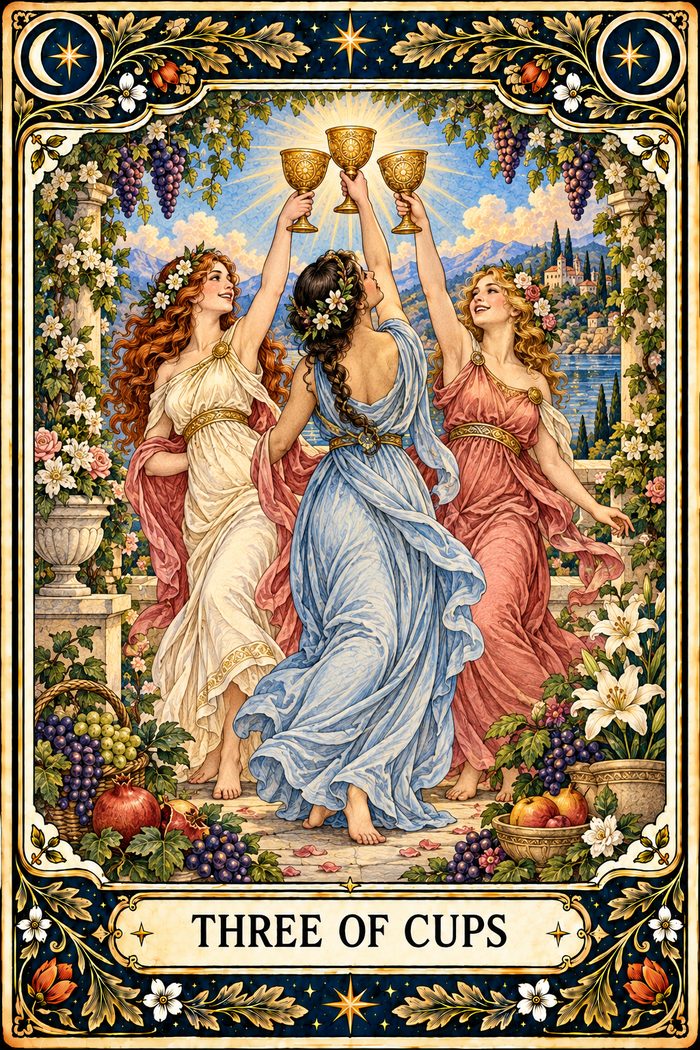
Three of Cups
Upright: Joy that's better shared — a genuine celebration among friends, the kind of community that shows up for you without being asked. Let this one be social.
Reversed: Celebration tipping into overindulgence, or a friend group straining under gossip and unspoken tension. The community that usually supports you might need some repair first.
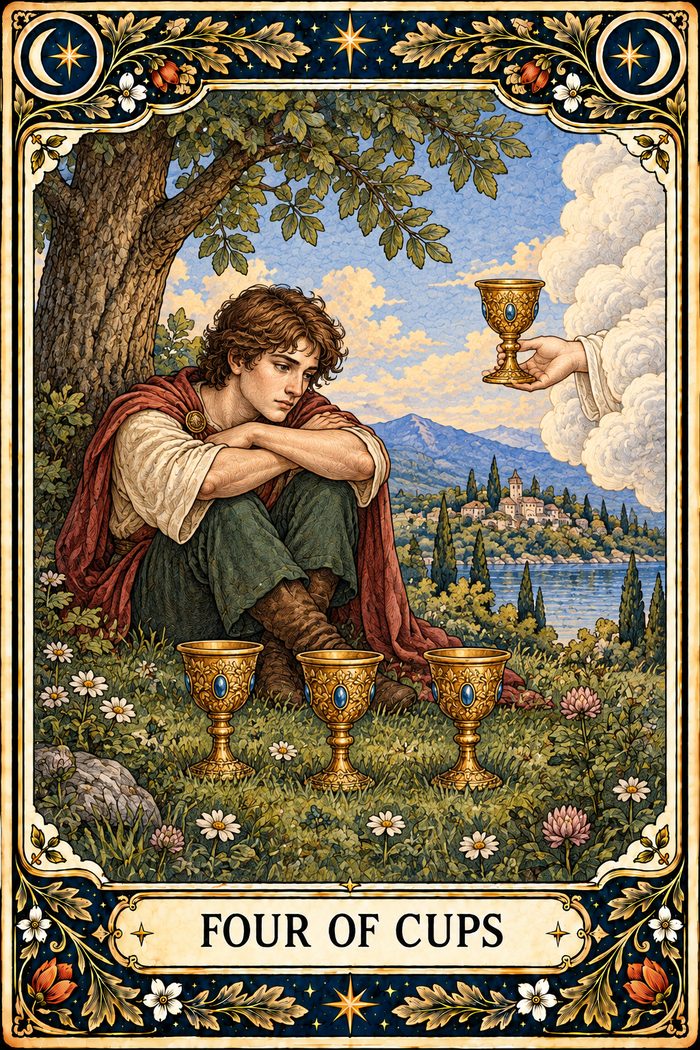
Four of Cups
Upright: A quiet, unbothered discontent — something good is being offered and you can't quite make yourself reach for it. Worth asking whether you're genuinely uninterested, or just numb from being disappointed before.
Reversed: The fog of apathy lifting — noticing an opportunity you'd been ignoring, and this time actually reaching for it.
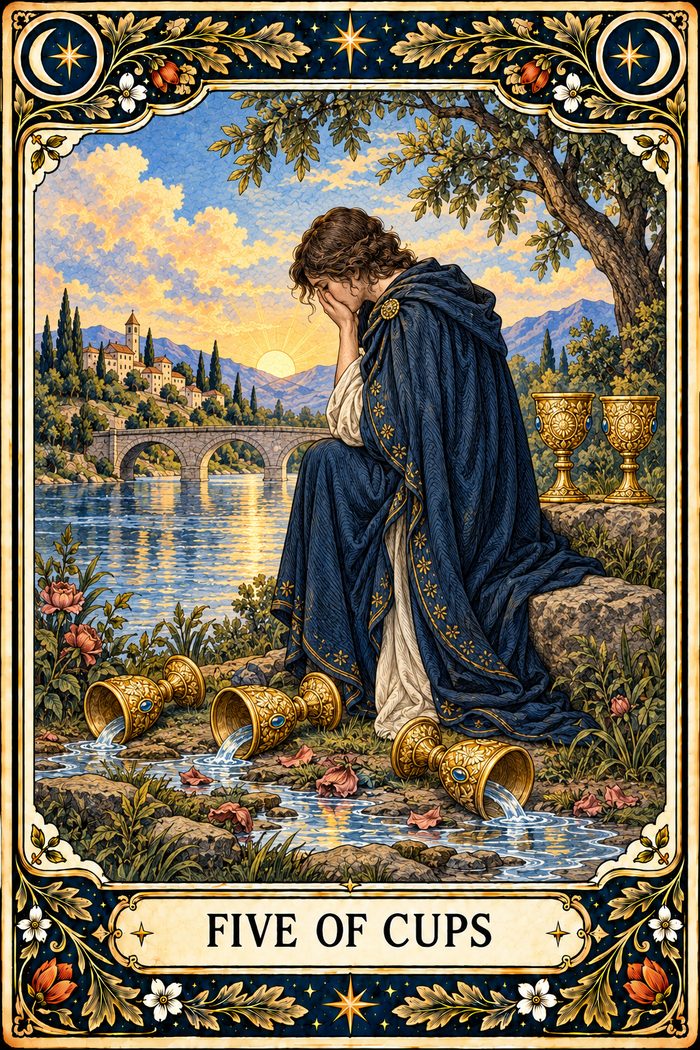
Five of Cups
Upright: Grief that's fixated on what went wrong — three cups spilled, two still standing, and all your attention on the spill. The remaining cups are real; you're just not ready to look at them yet, and that's allowed for now.
Reversed: Finally turning to face what's still standing instead of what was lost — acceptance arriving not as forgetting, but as peace made with the past.
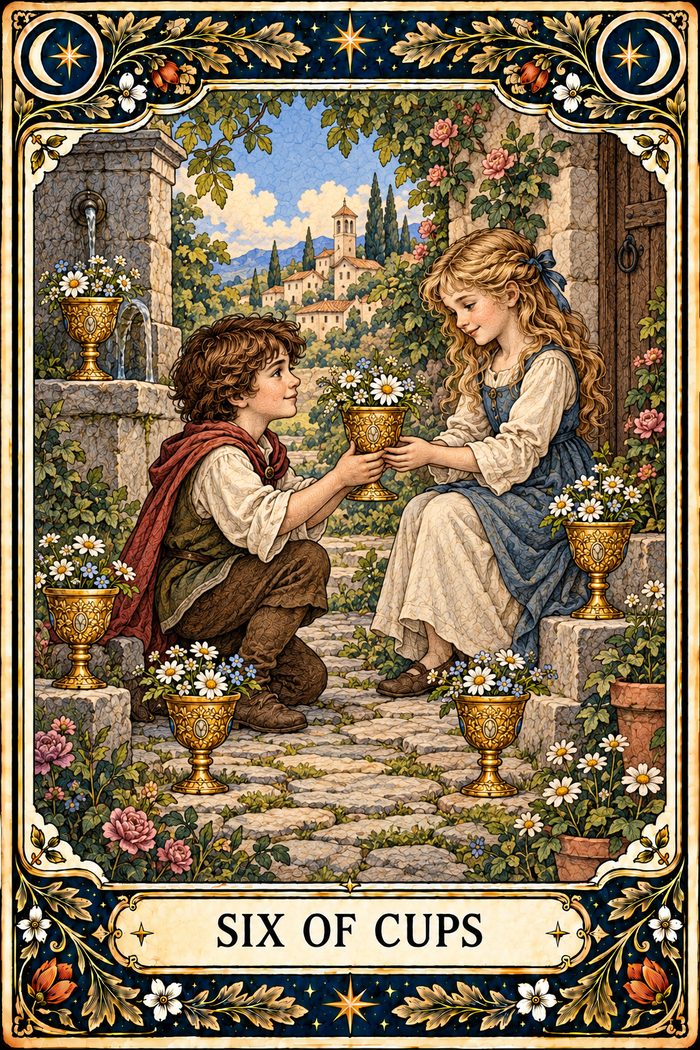
Six of Cups
Upright: A warm pull toward the past — an old friend resurfacing, a memory that still feels like home, a simpler version of a situation you're currently in. Sweet, as long as you don't move in there permanently.
Reversed: Nostalgia that's stopped being sweet and started being a hiding place — or, in its better sense, the moment you finally step out of the past and back into now.
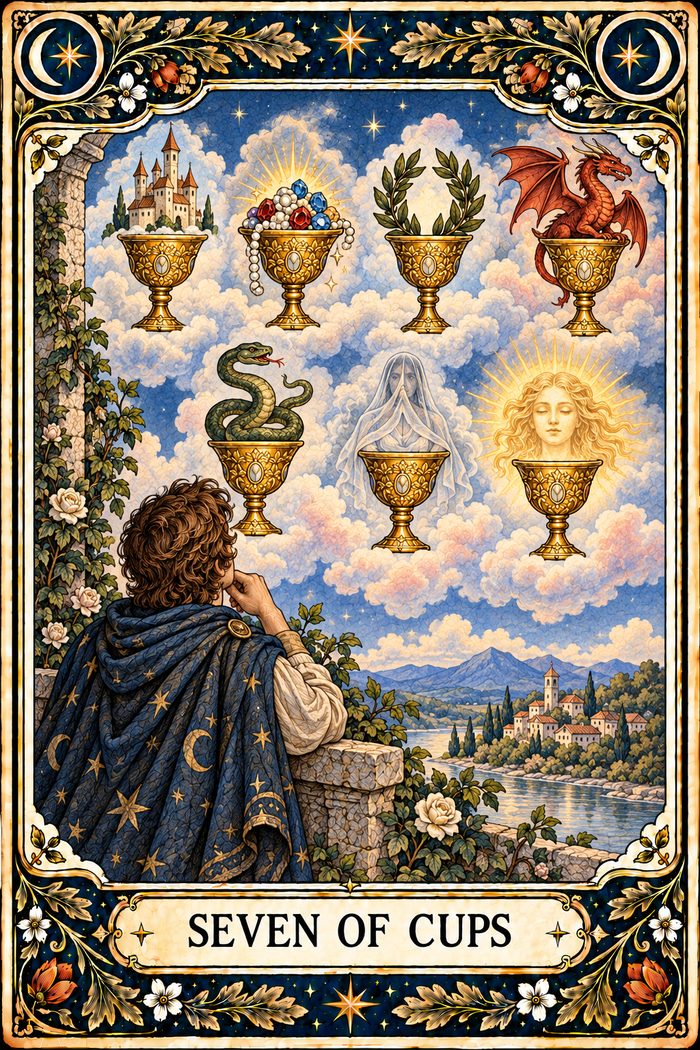
Seven of Cups
Upright: A dazzling spread of possibilities, some real and some more wishful thinking than substance. This card asks you to actually look closely at each cup rather than being charmed by all of them at once.
Reversed: The daydream narrowing into a decision — illusions falling away and one option finally standing out clearly enough to commit to.
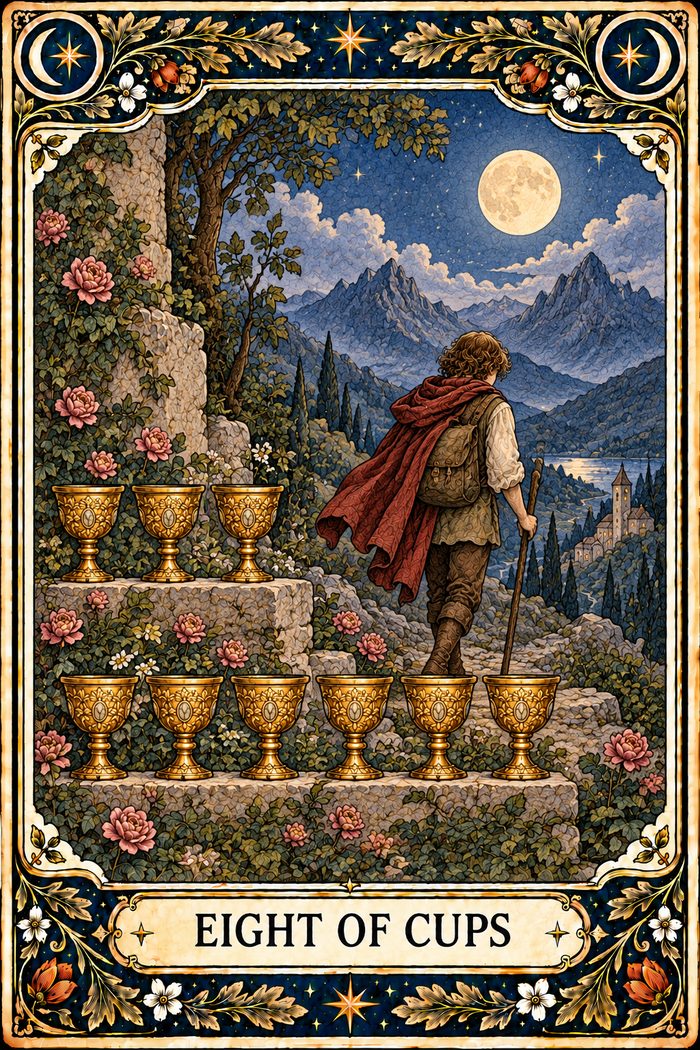
Eight of Cups
Upright: Turning your back on something that used to be enough, because it isn't anymore — not out of anger, but out of a quiet need for something with more depth. What you're leaving behind was fine; it's just not it.
Reversed: Knowing it's time to go and going anyway — staying out of fear, or wandering without ever actually making the walk away real.
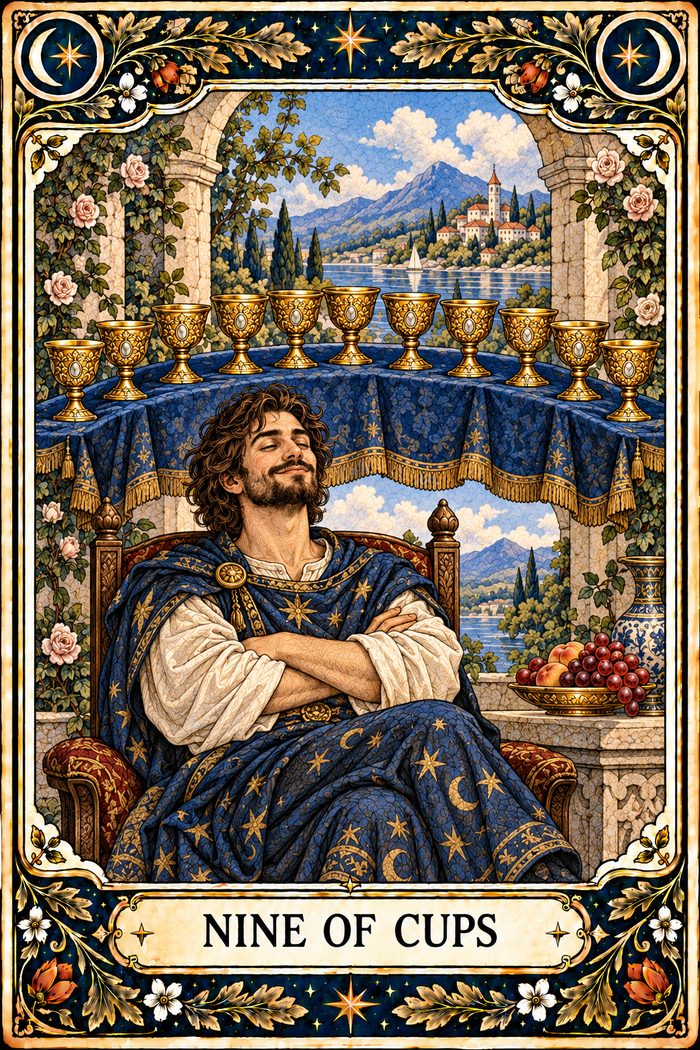
Nine of Cups
Upright: The traditional “wish card” — genuine contentment, a want that's actually been met rather than just chased. Simple, satisfied, and allowed to enjoy itself.
Reversed: Satisfaction that's gone shallow — smugness, overindulgence, or a pile of everything you wanted that somehow still feels empty.

Ten of Cups
Upright: The deck's vision of a happy ending — not a single perfect moment but an ongoing harmony at home, the kind of fulfillment that holds up over years, not just an evening.
Reversed: The picture of harmony not quite matching reality — family friction, values that don't line up the way you hoped, an ideal still out of reach.
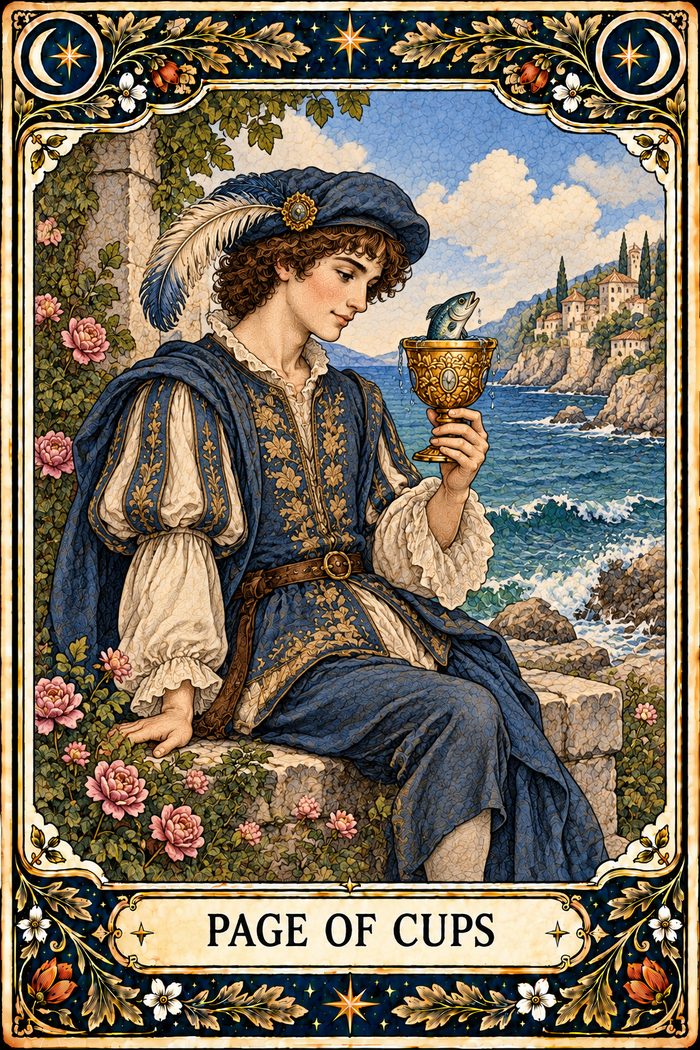
Page of Cups
Upright: An unguarded, curious openness to feeling and creativity — often literally a message or invitation arriving, offered with a beginner's sincerity rather than any agenda.
Reversed: Sensitivity that's tipped into moodiness or insecurity, or an emotional expectation of someone (maybe yourself) that isn't quite realistic yet.
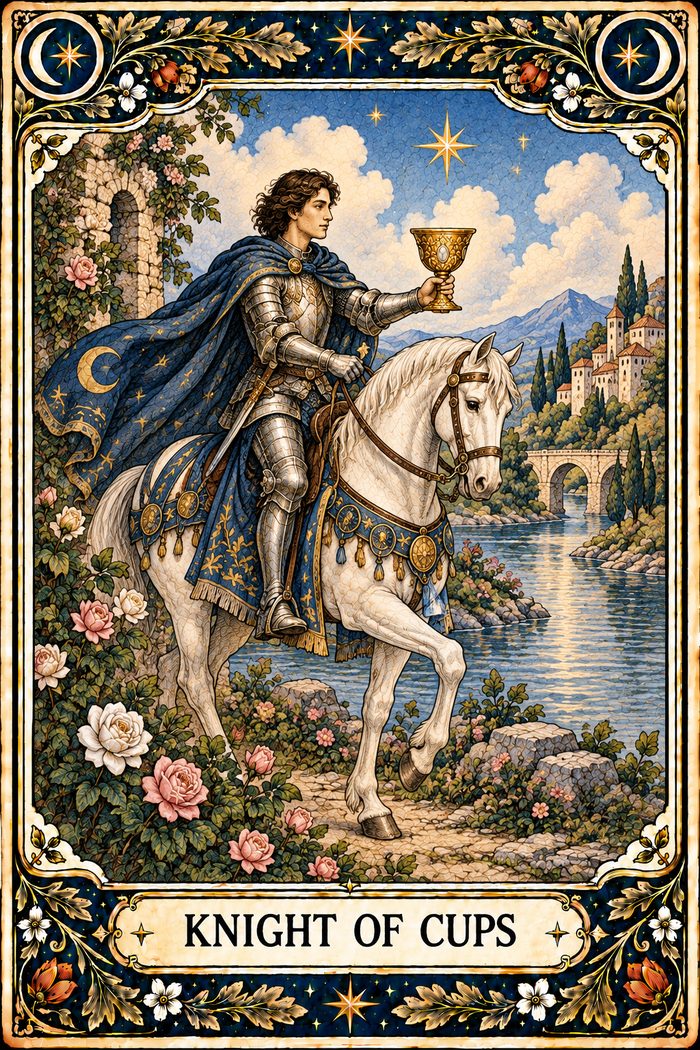
Knight of Cups
Upright: Leading with the heart — a romantic offer, an invitation, a pursuit driven by feeling rather than strategy. Charming, and sincere in the moment it's offered.
Reversed: Charm that doesn't hold up under follow-through — promises made in a feeling that didn't last, or moodiness swinging in where warmth used to be.
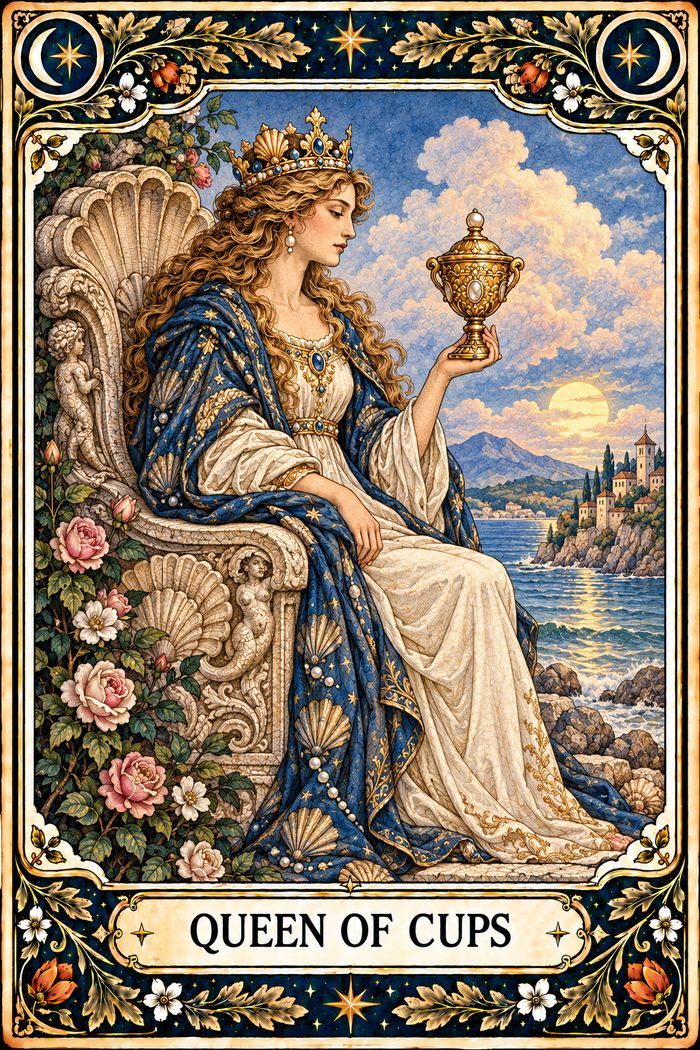
Queen of Cups
Upright: A deep, steady well of compassion — emotionally secure enough to hold space for other people without losing yourself in the process. Intuition here reads as genuine care, not performance.
Reversed: Care that's tipped into self-sacrifice, or emotional security that's cracked under the weight of everyone else's feelings. Watch for quiet martyrdom disguised as generosity.
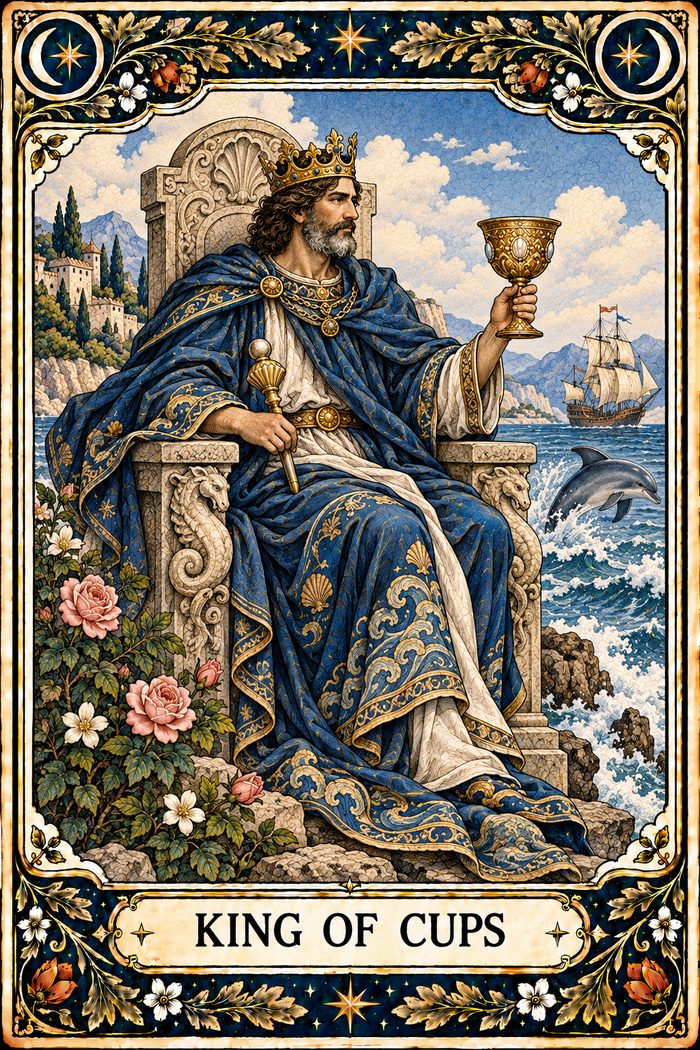
King of Cups
Upright: Feeling deeply without being ruled by it — calm wisdom that comes from having made peace with your own emotional weather. Generosity here is steady, not performative.
Reversed: Emotional control slipping — moodiness under a calm surface, or feelings used to manipulate rather than connect.

Ace of Swords
Upright: A single clear thought cutting straight through a fog you've been stuck in — a breakthrough, an insight, the truth stated plainly at last.
Reversed: Clarity that hasn't arrived yet — a clouded, overloaded mind, or a truth being twisted for someone's convenience instead of used honestly.
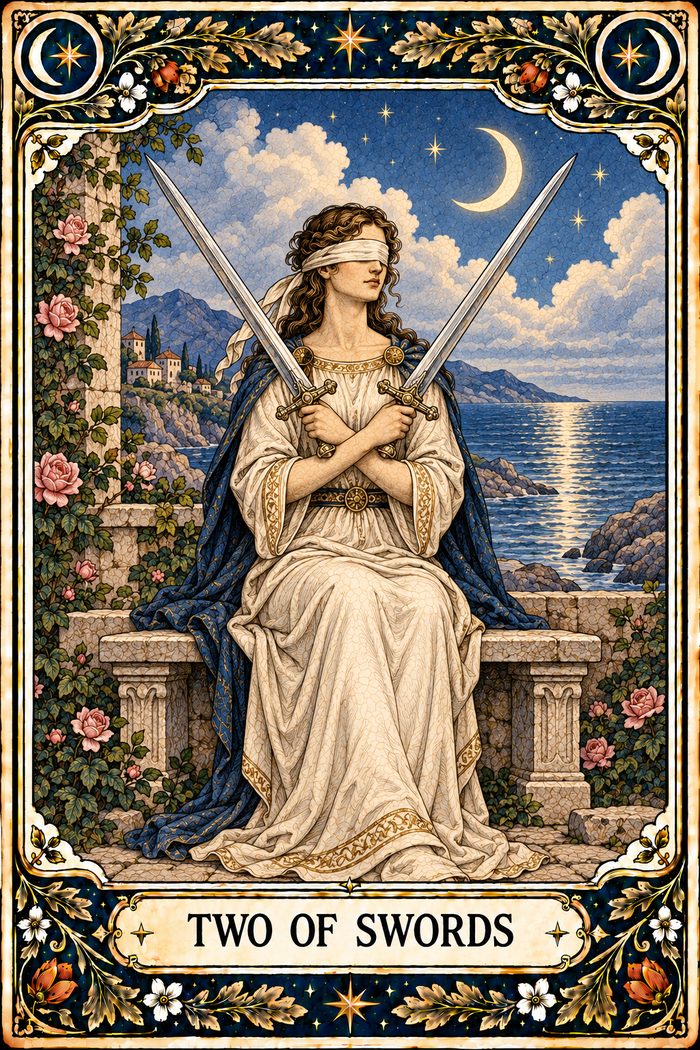
Two of Swords
Upright: Standing blindfolded between two swords, refusing to choose because both options hurt in different ways. The stalemate feels safer than deciding, but it isn't actually neutral.
Reversed: The blindfold finally coming off — new information forcing a decision that's been avoided, one way or another.
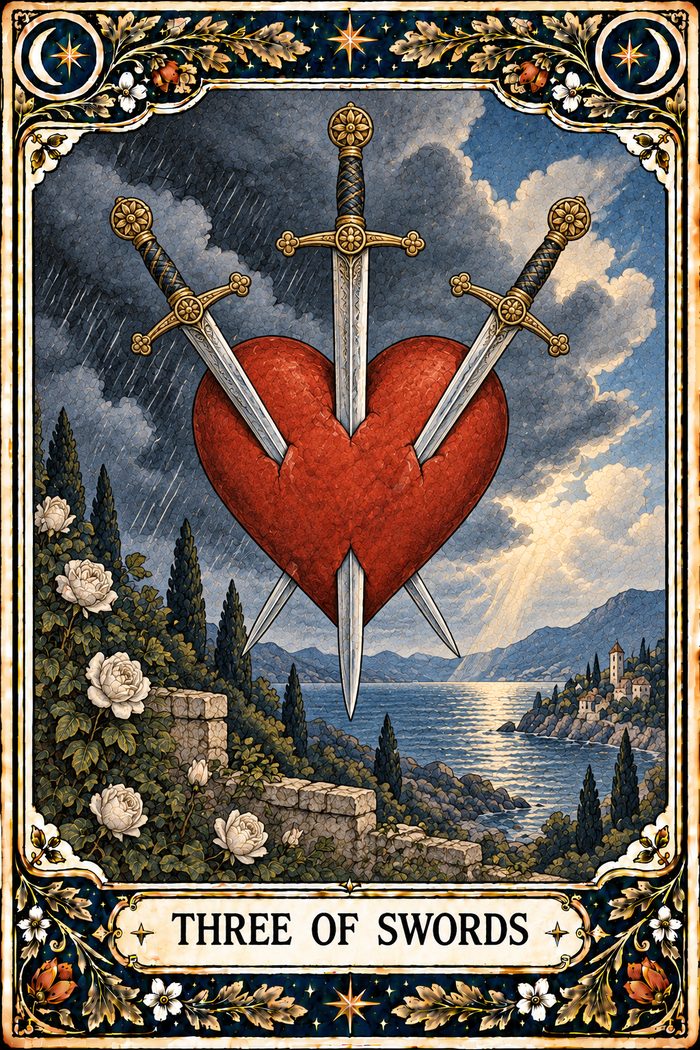
Three of Swords
Upright: A grief that's sharp and specific — heartbreak, betrayal, a truth that hurts precisely because it's true. There's no softening this one, but the honesty in it is the beginning of healing.
Reversed: The sharpest edge of the pain finally dulling — forgiveness taking hold, sorrow starting to loosen its grip.
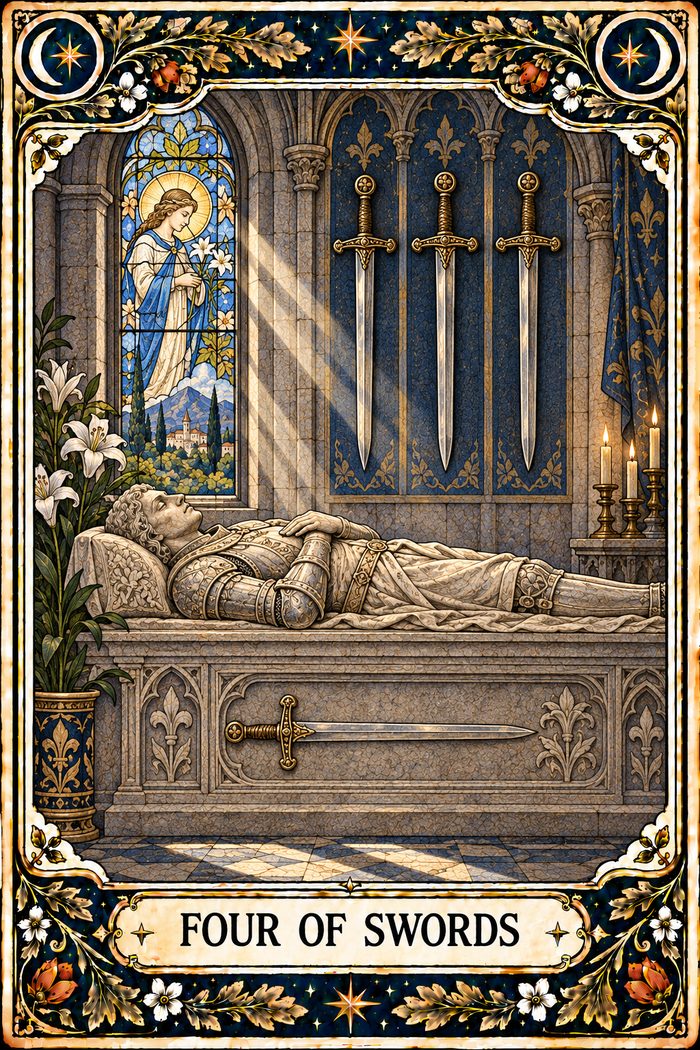
Four of Swords
Upright: A deliberate retreat to recover — not defeat, just the rest your mind and body actually need before the next round. Permission to stop, on purpose.
Reversed: Rest that arrived too late, forced by exhaustion rather than chosen — or a stillness that's gone stagnant instead of restorative.
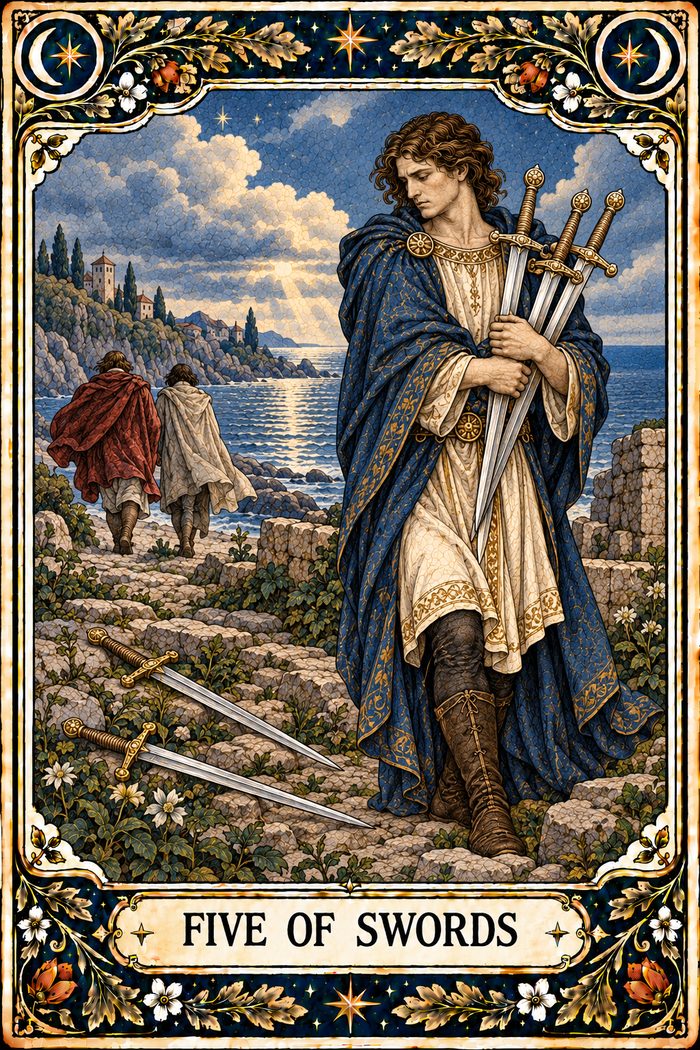
Five of Swords
Upright: Winning an argument in a way that costs you something — a hollow victory, or conflict that leaves everyone worse off even though someone technically “won.”
Reversed: Choosing to let a fight actually end — setting down a grudge instead of keeping score, even if you were technically in the right.
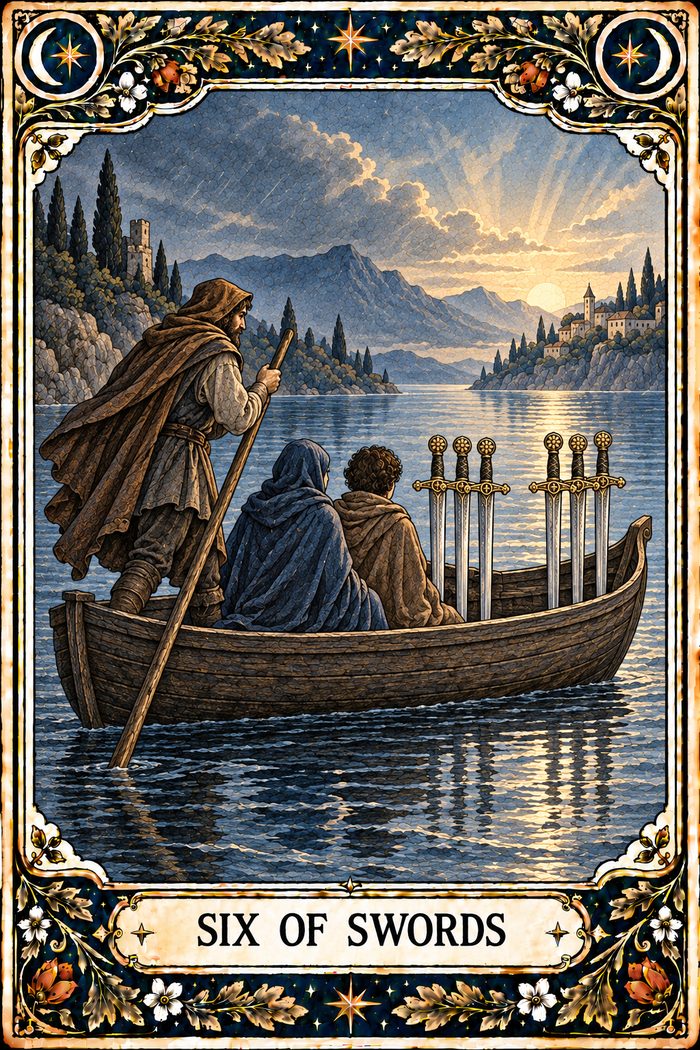
Six of Swords
Upright: A quiet passage away from a hard stretch — not triumphant, just steady movement toward calmer water. The rowing is slow, but the direction is right.
Reversed: Struggling to leave a hard situation behind — unfinished business trailing after you, or a transition that's stalled halfway across.
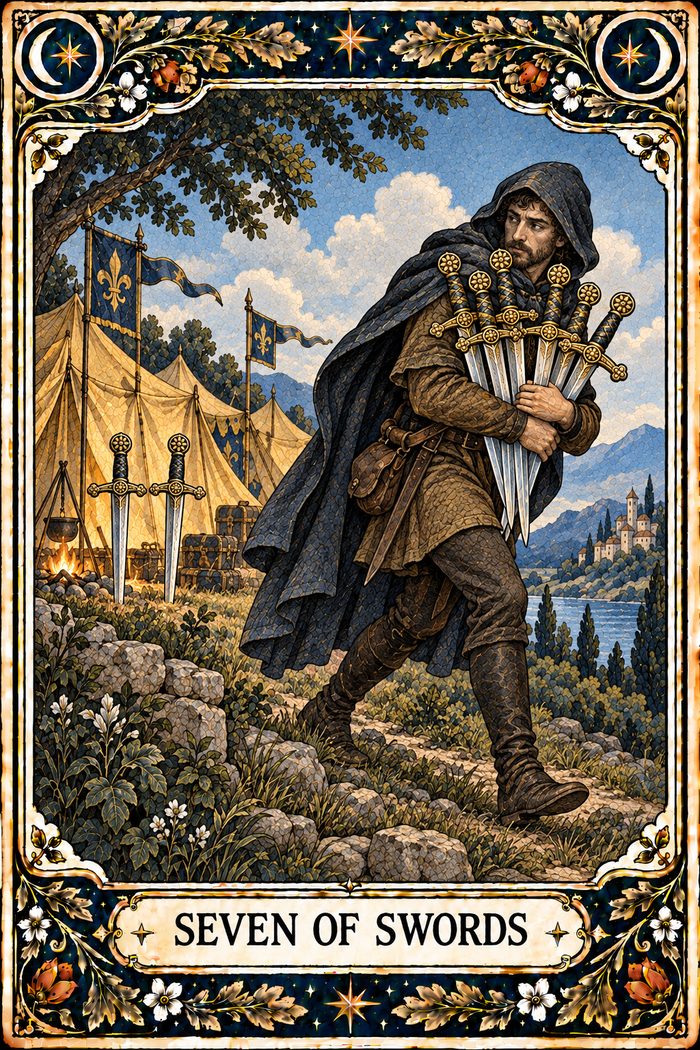
Seven of Swords
Upright: Solving a problem quietly, off to the side, in a way that serves you more than it serves transparency. Sometimes clever strategy, sometimes something closer to getting away with it — worth being honest with yourself about which.
Reversed: The quiet strategy getting exposed, or — the more hopeful read — finally coming clean about something you'd rather not have hidden in the first place.
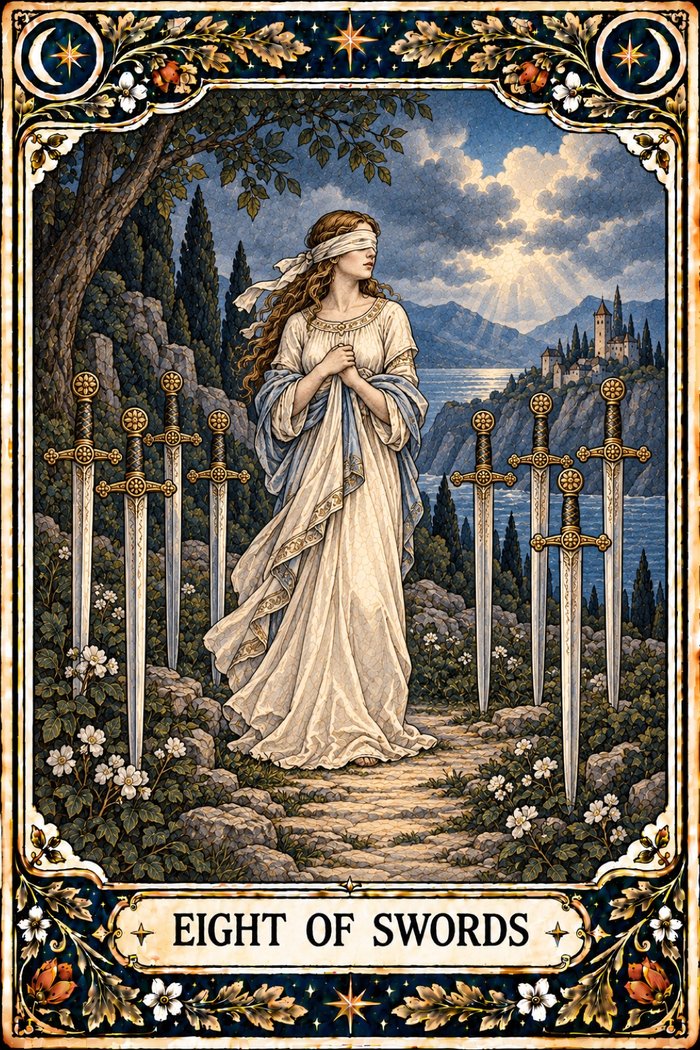
Eight of Swords
Upright: Standing bound and blindfolded in a cage with the door actually open — the restriction here is mostly the belief that you can't move, not an actual lack of options.
Reversed: Realizing the blindfold was removable all along — a way out becoming visible once the fear driving the paralysis finally loosens.
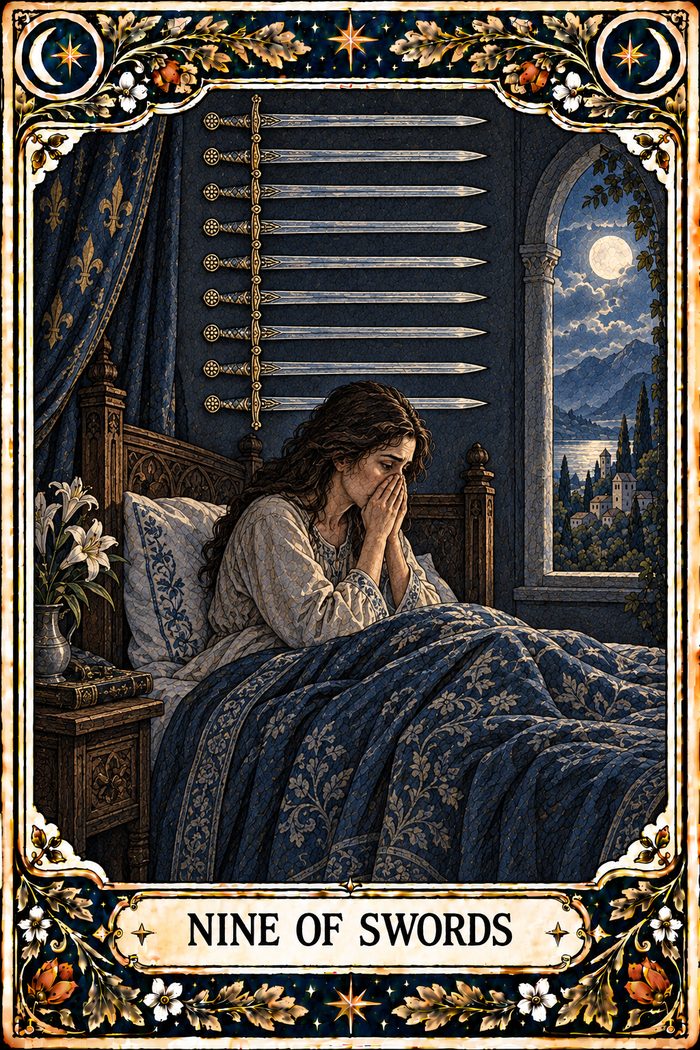
Nine of Swords
Upright: The 3am spiral — worry that's louder than the facts warrant, a mind that keeps rehearsing the worst version of events. The fear is real even when the catastrophe isn't.
Reversed: Turning to actually look at the fear instead of just lying awake with it — anxiety starting to loosen once it's finally named out loud.
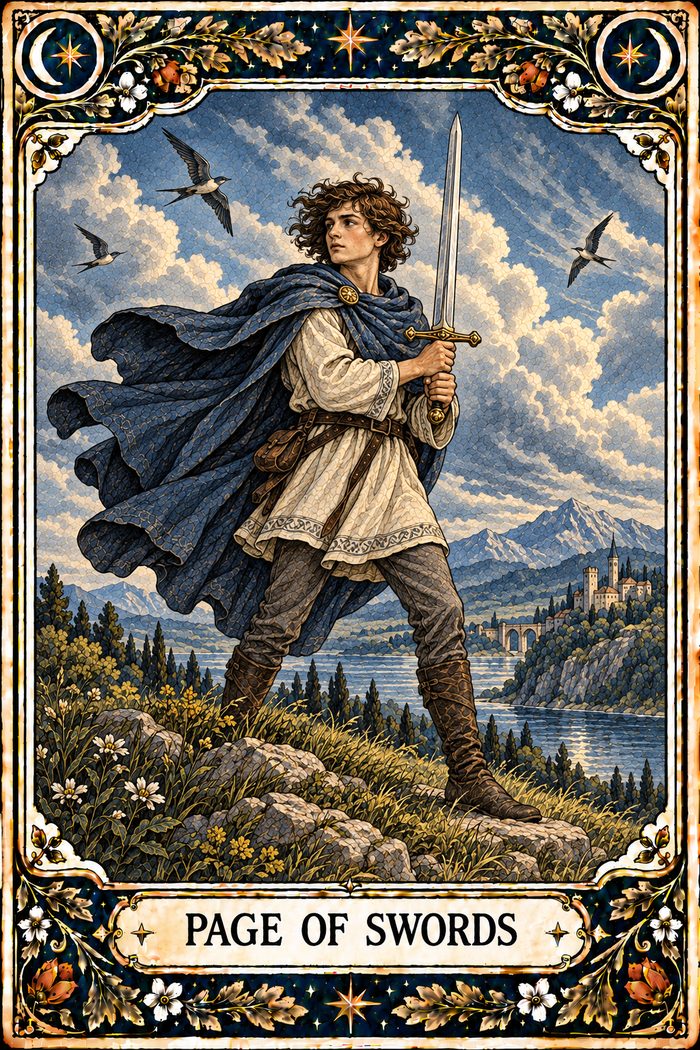
Ten of Swords
Upright: A dramatic, undeniable ending — betrayal or collapse that hurts precisely because there's no more denying it's over. Grim as it looks, this is also the bottom, which means the only direction left is up.
Reversed: Recovery beginning after the worst has passed, or — the harder read — still refusing to accept that something is actually over.
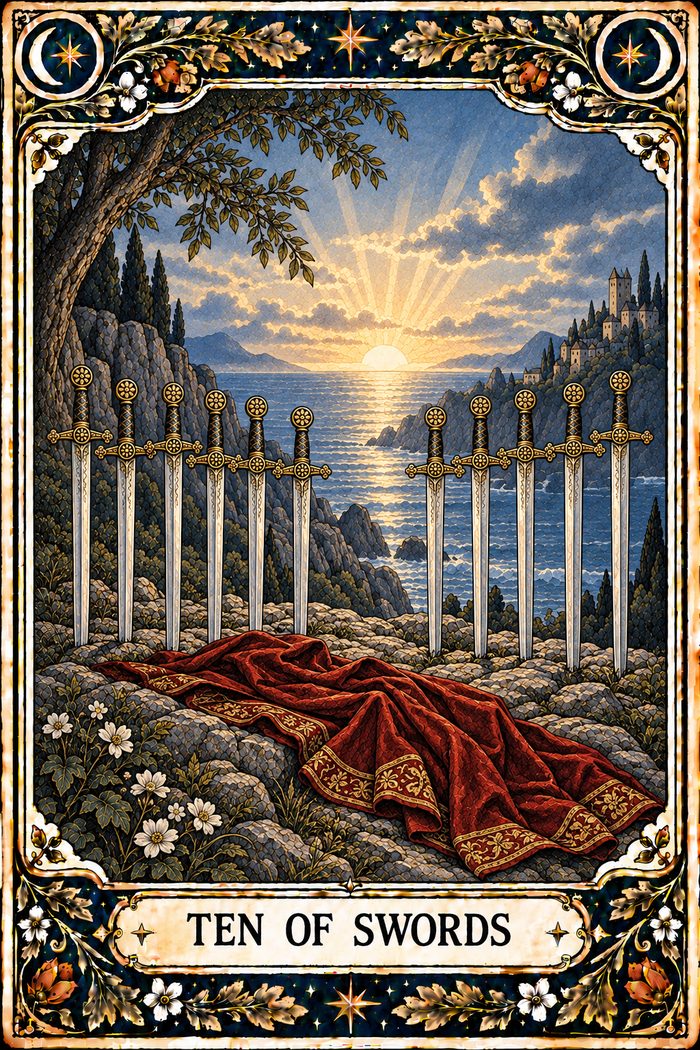
Page of Swords
Upright: A sharp, watchful curiosity — someone (maybe you) picking up a new way of thinking and testing it out loud before it's fully formed. Alert, a little restless, genuinely interested.
Reversed: Curiosity that's turned into gossip, or a mind so scattered across ideas that none of them get followed through.
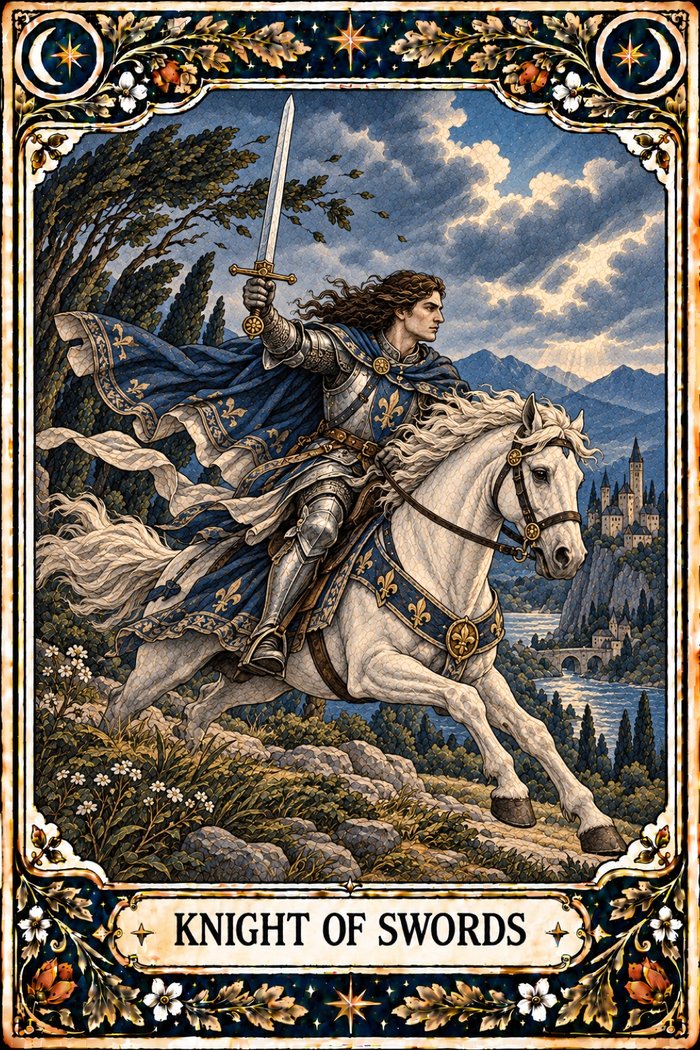
Knight of Swords
Upright: Riding straight at the goal with no patience for detours — fast, decisive, and ambitious, cutting through anything that slows things down.
Reversed: That same directness with none of the judgment — impulsive action that's stopped checking whether the target is even the right one.
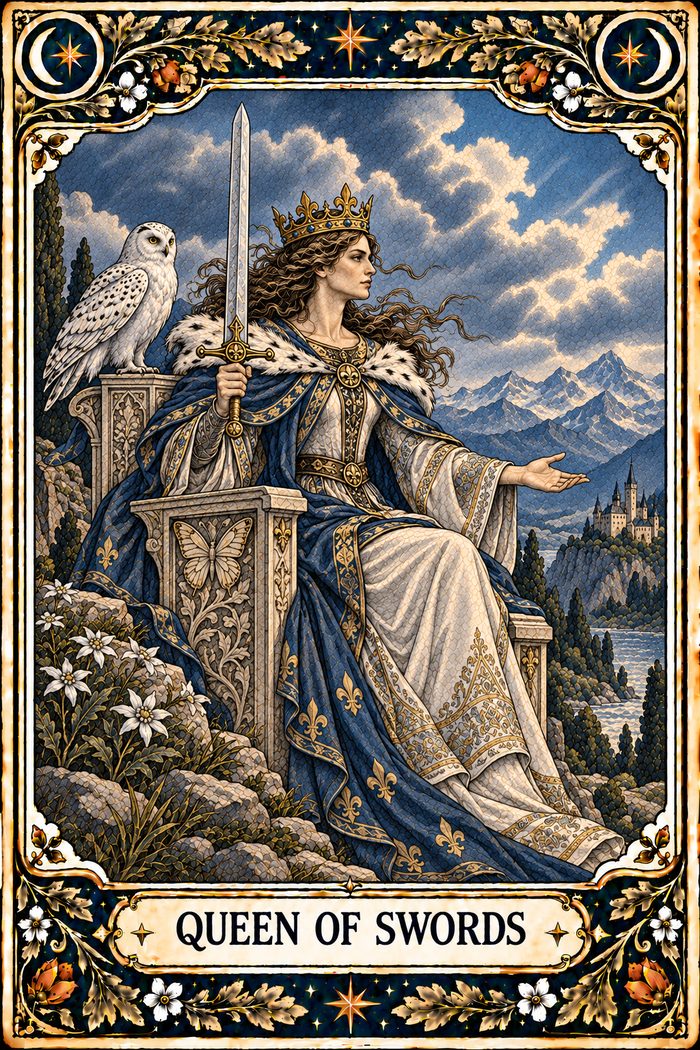
Queen of Swords
Upright: Honesty delivered without softening it, from someone who's learned to trust clear thinking over comforting stories. Independent, direct, and unusually hard to fool.
Reversed: That same clarity turned cold — honesty used as a weapon, or bitterness from old wounds sharpening every word.
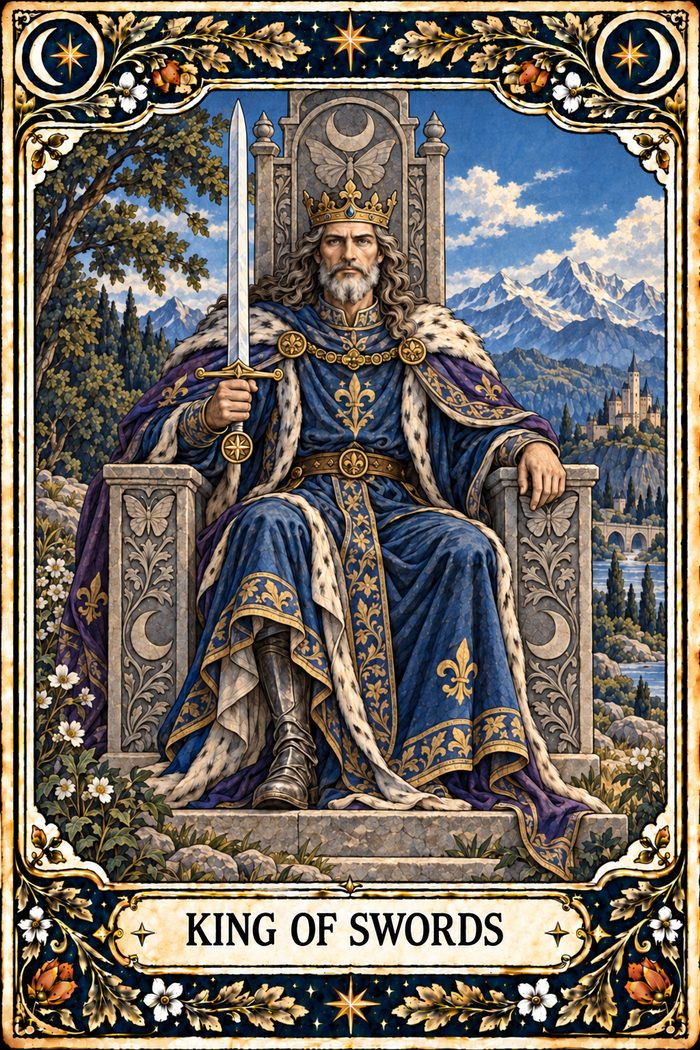
King of Swords
Upright: Judgment made from a clear, disciplined mind — truth stated plainly and fairly, authority earned through logic rather than force.
Reversed: Intelligence used to control rather than clarify — cold logic that's lost its connection to compassion, or authority that's become manipulation.

Ace of Pentacles
Upright: A tangible new opportunity landing in your hand — money, a job, a health decision, something real enough to actually build on. Worth planting properly rather than rushing to spend.
Reversed: An opportunity that slipped past, or one being approached from a place of scarcity instead of possibility. Poor planning can waste a genuinely good seed.
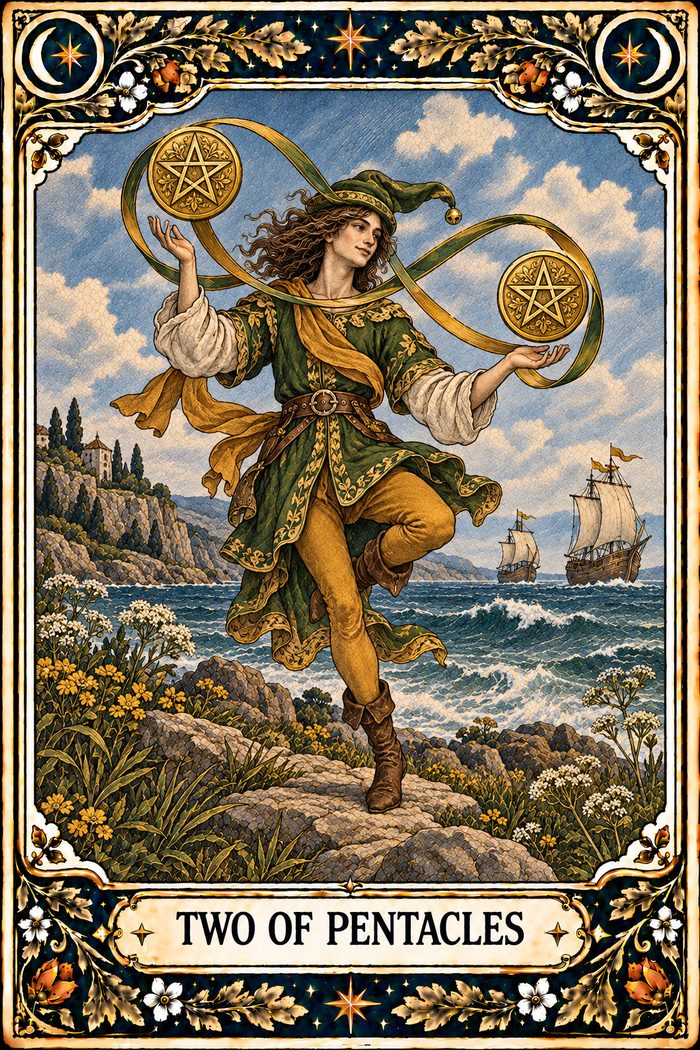
Two of Pentacles
Upright: Keeping several things moving at once without dropping any of them — not effortless, but managed with a kind of adaptable rhythm. This card is competent, not chaotic.
Reversed: The juggling act finally overwhelmed — priorities colliding, something important slipping through because there was simply too much in the air.
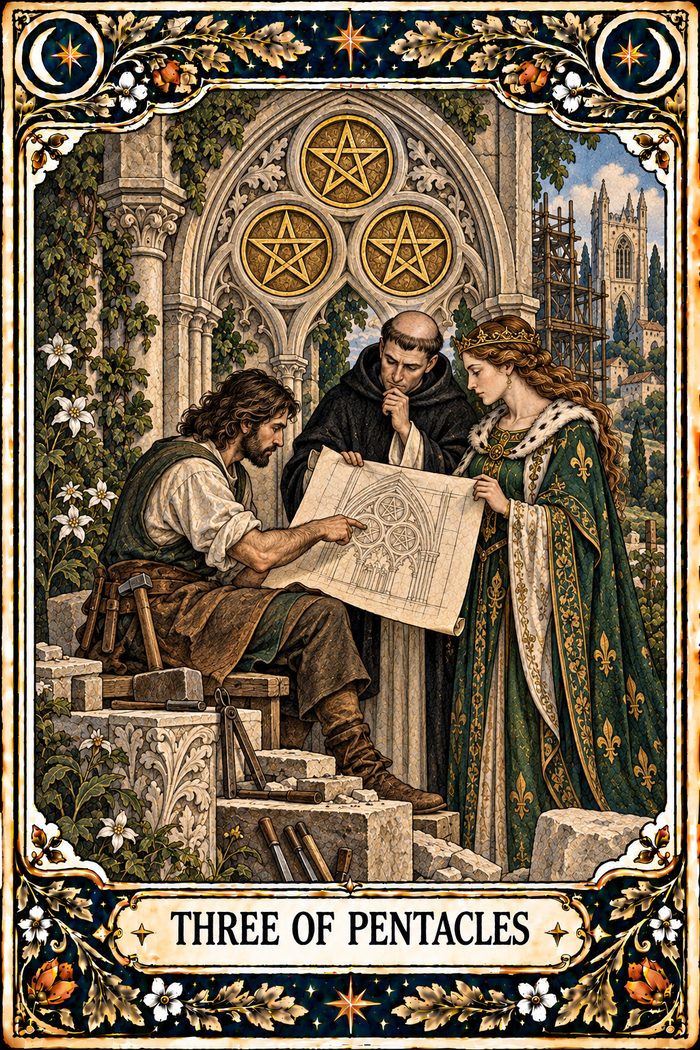
Three of Pentacles
Upright: Real work, done well, recognized by people whose opinion actually matters — the payoff of collaboration where everyone brought their real skill to the table.
Reversed: A team pulling in different directions, or good work going unrecognized because no one coordinated it properly. Sometimes just means you're carrying it alone when it should be shared.
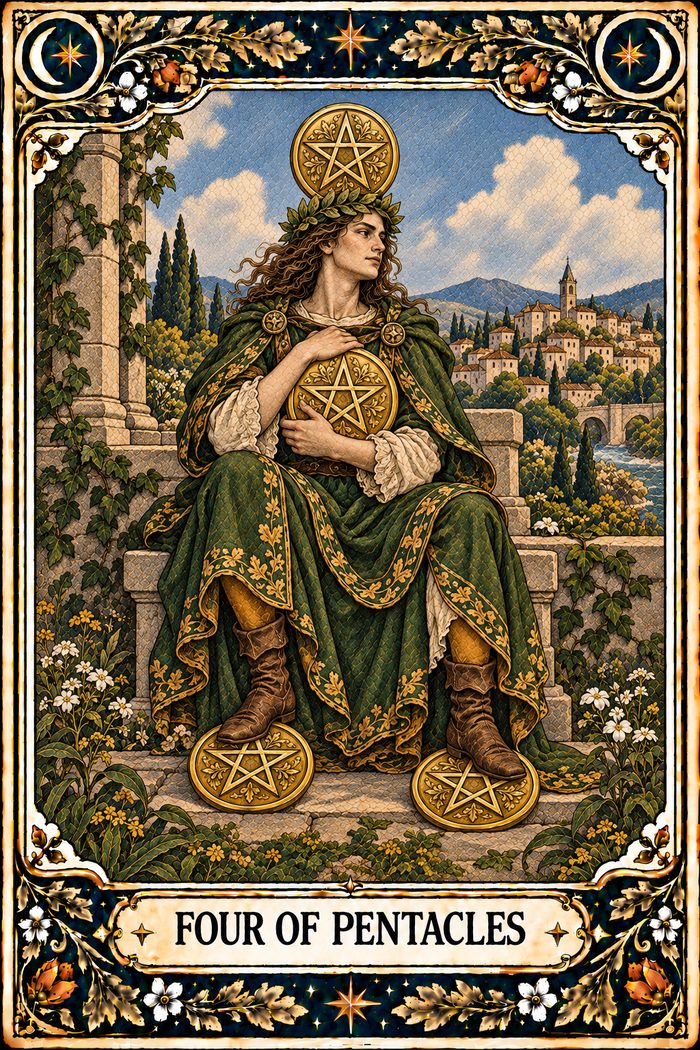
Four of Pentacles
Upright: A tight grip on what you've built — security through holding on, saving carefully, not wanting to risk what took real effort to gather.
Reversed: That grip finally loosening — generosity replacing hoarding, or, less comfortably, a fear of loss that's driving the decision more than sound judgment is.
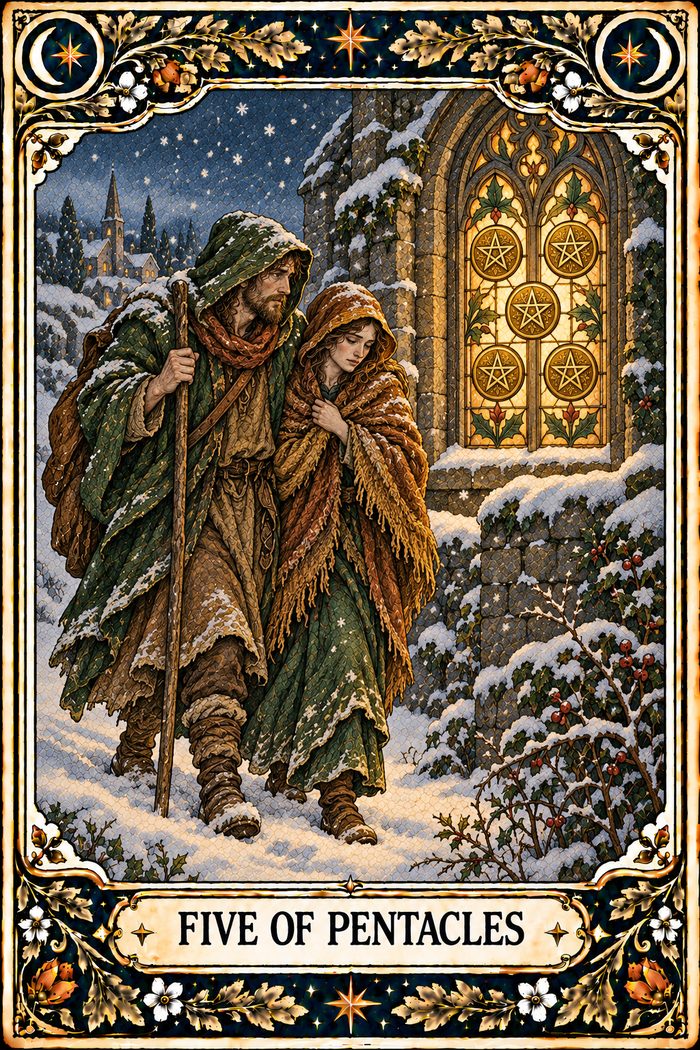
Five of Pentacles
Upright: A genuinely hard stretch — money tight, support feeling out of reach, standing outside looking in at warmth you can't currently access. Real, and usually temporary.
Reversed: Help finally becoming visible after a hard stretch — support arriving, or simply the sense that the worst of it is now behind you.
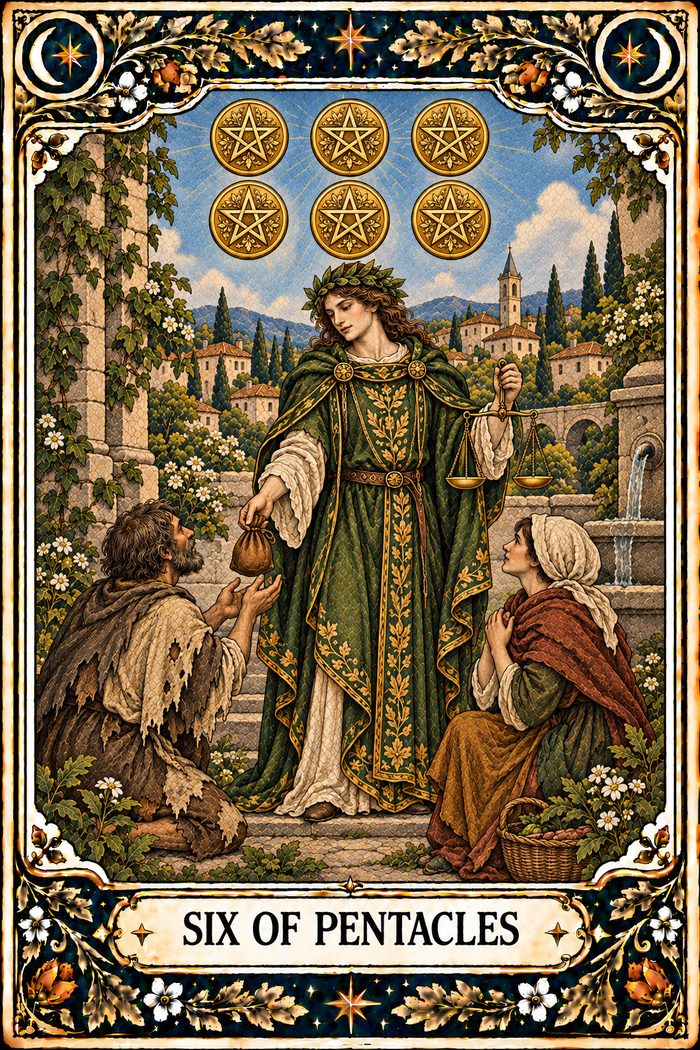
Six of Pentacles
Upright: Resources moving in a healthy balance — genuine generosity given and received without either side keeping score. Worth noticing which side of the exchange you're currently on.
Reversed: Generosity that comes with conditions attached, or a balance of give-and-take that's tipped uncomfortably to one side. Debt, literal or emotional, tends to show up here.
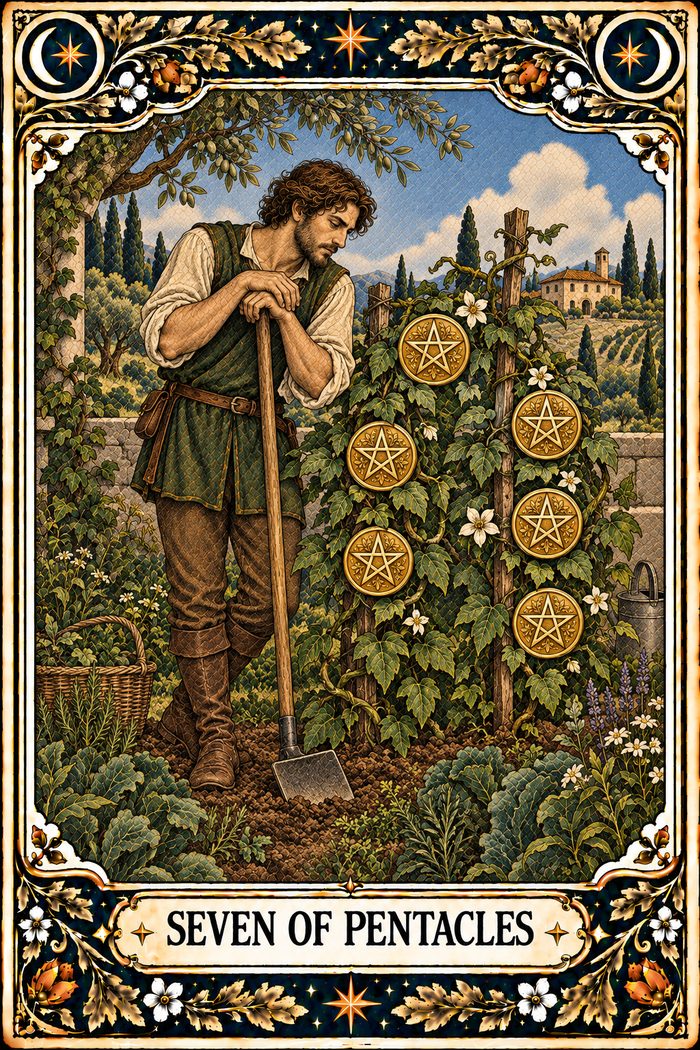
Seven of Pentacles
Upright: Standing back from something you've been tending for a while to honestly assess how it's actually growing. Patience here is active, not passive — it's checking the work, not just waiting.
Reversed: Impatience pulling focus away from the long game, or effort invested somewhere that isn't actually going to pay off. Worth a genuinely honest look at the numbers.
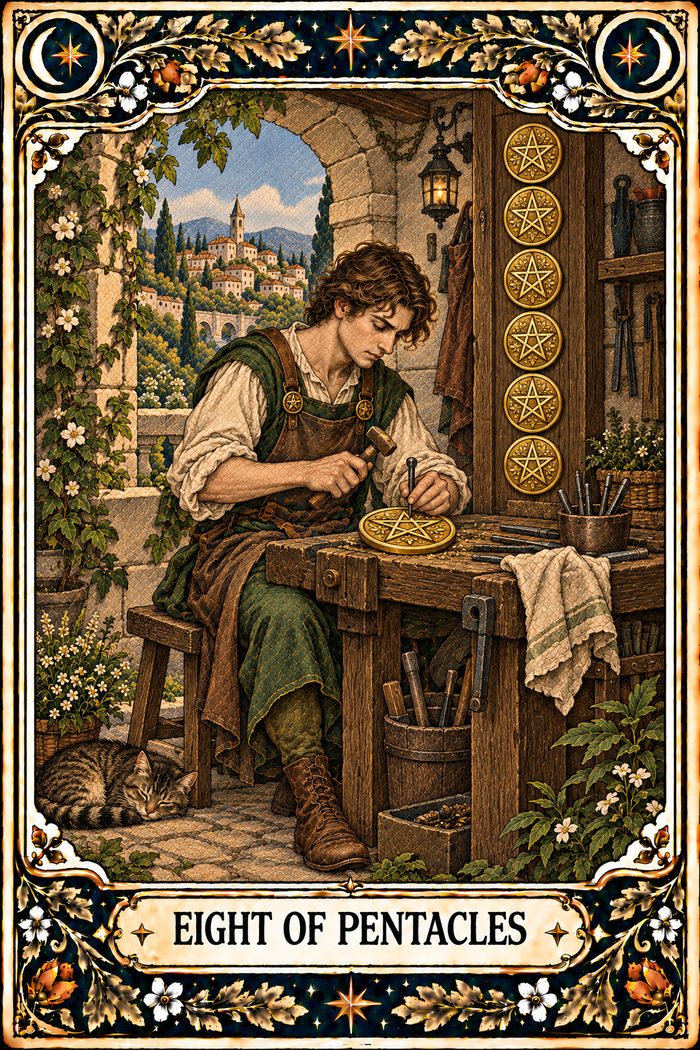
Eight of Pentacles
Upright: The unglamorous work of getting genuinely good at something — repetition, diligence, craft built one careful rep at a time rather than through a single flash of talent.
Reversed: Either perfectionism that's stalling real progress, or the opposite — corners cut, focus scattered, care replaced with just getting it done.
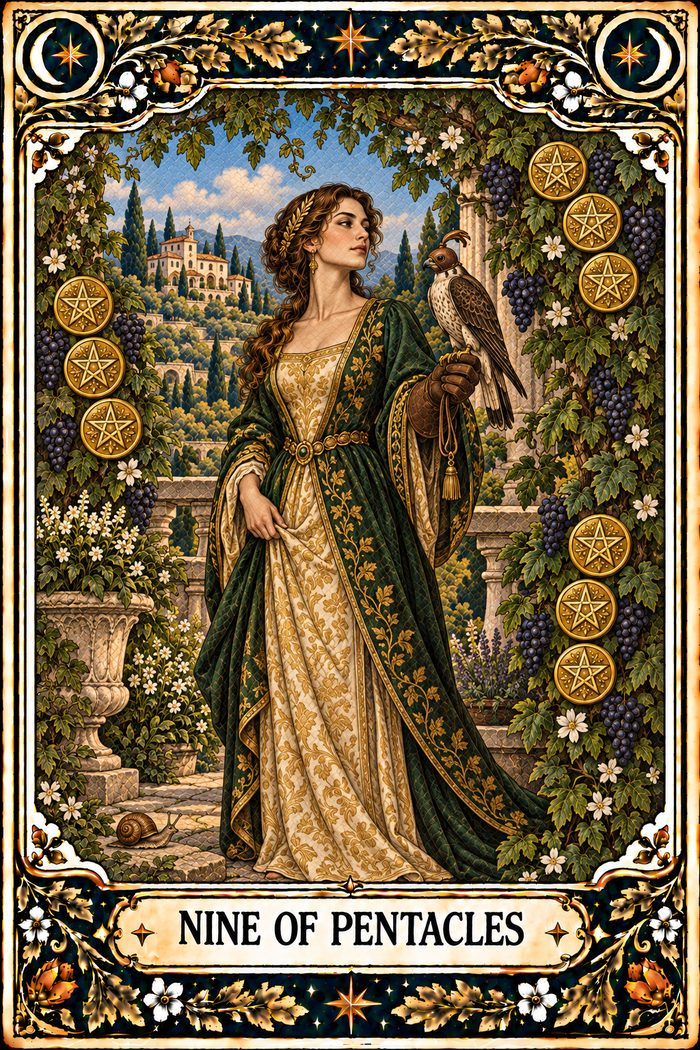
Nine of Pentacles
Upright: Comfort that you built yourself and don't need anyone's permission to enjoy — self-sufficiency that's earned its ease, independence that feels good rather than lonely.
Reversed: A polished exterior hiding real strain underneath — success that looks secure but isn't, or independence that's tipped into overextension.
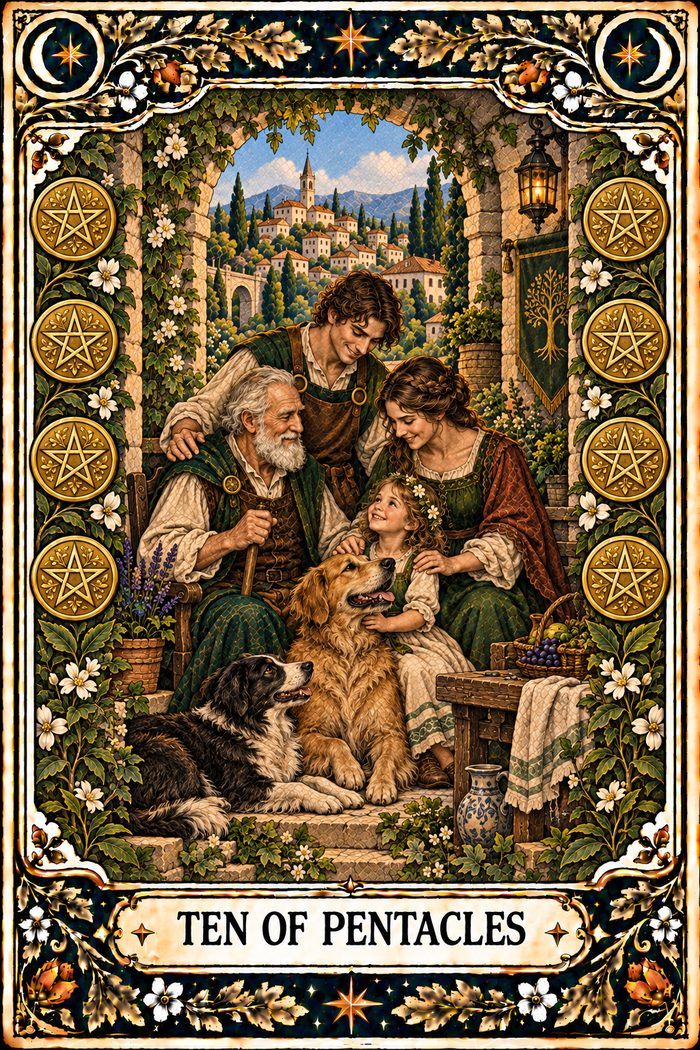
Ten of Pentacles
Upright: Security that outlasts a single lifetime — legacy, family resources, the kind of stability built to be handed down rather than spent all at once.
Reversed: That long-term security shaken — conflict over inheritance or resources, or a stability that turns out to have been more fragile than it looked.
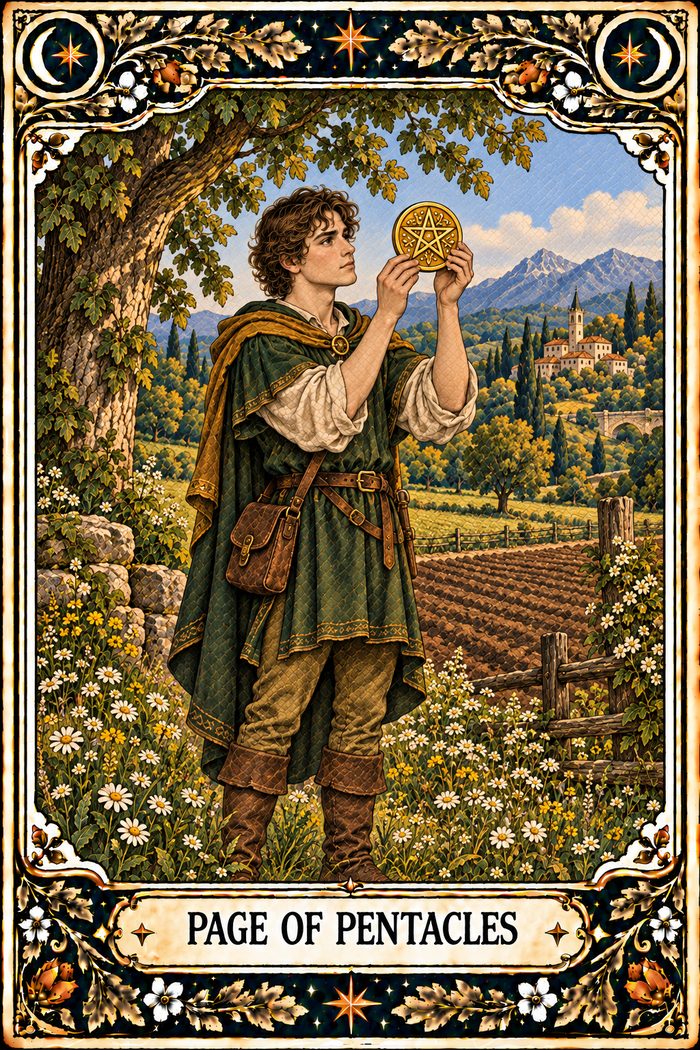
Page of Pentacles
Upright: A genuinely eager student — a new skill or opportunity approached with practical ambition and real willingness to put in the study time.
Reversed: Ambition that hasn't translated into action yet — a goal set with excitement and then quietly procrastinated on.
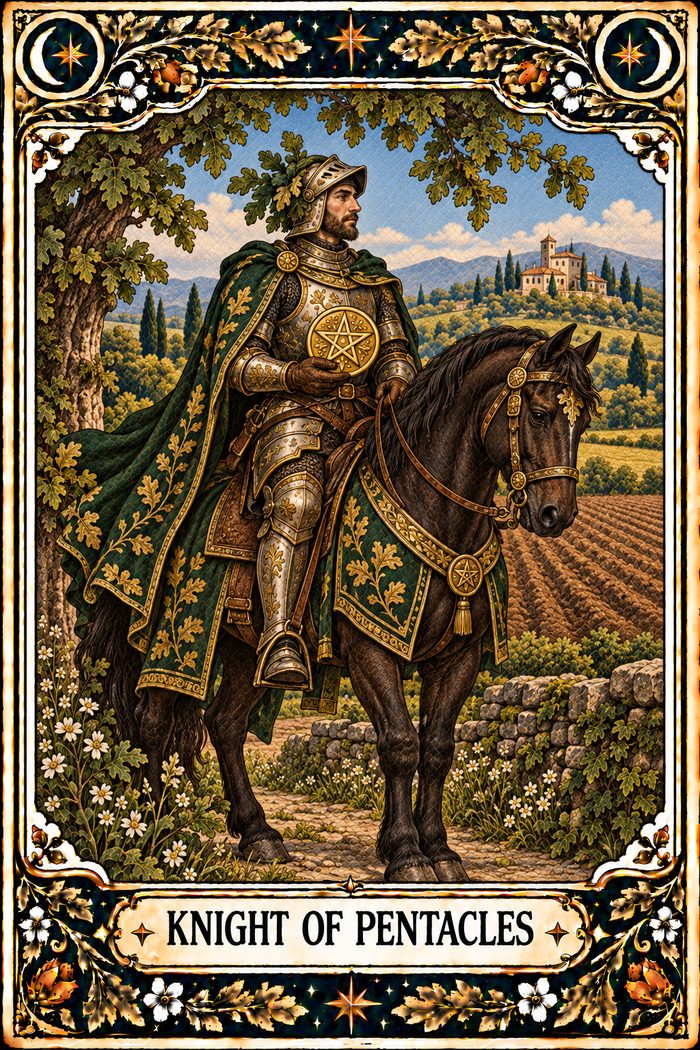
Knight of Pentacles
Upright: Slow, unglamorous, completely reliable progress — showing up and doing the methodical work day after day, when nobody's watching and nothing's dramatic.
Reversed: That same steadiness gone stale — reliability curdling into boredom, or a routine that's stopped actually moving anything forward.
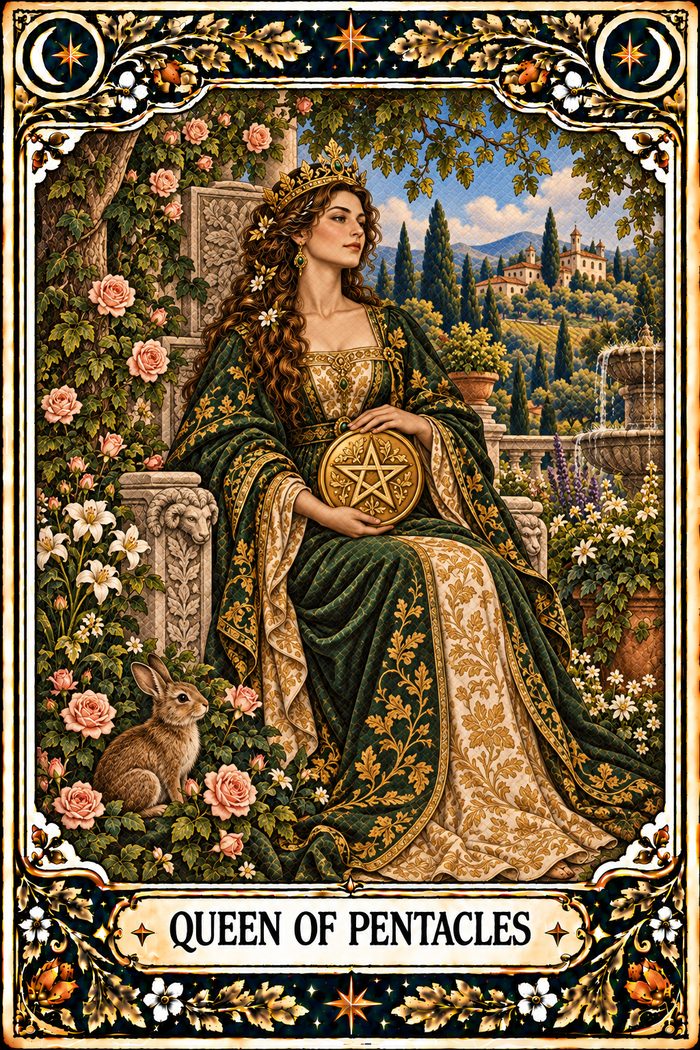
Queen of Pentacles
Upright: Care that shows up in practical form — a well-run, comfortable home, resourcefulness that makes everyone around you feel steadier. Nurturing here is hands-on, not abstract.
Reversed: So busy caring for everyone else's comfort that your own gets neglected — or care that's tipped into smothering instead of steadying.
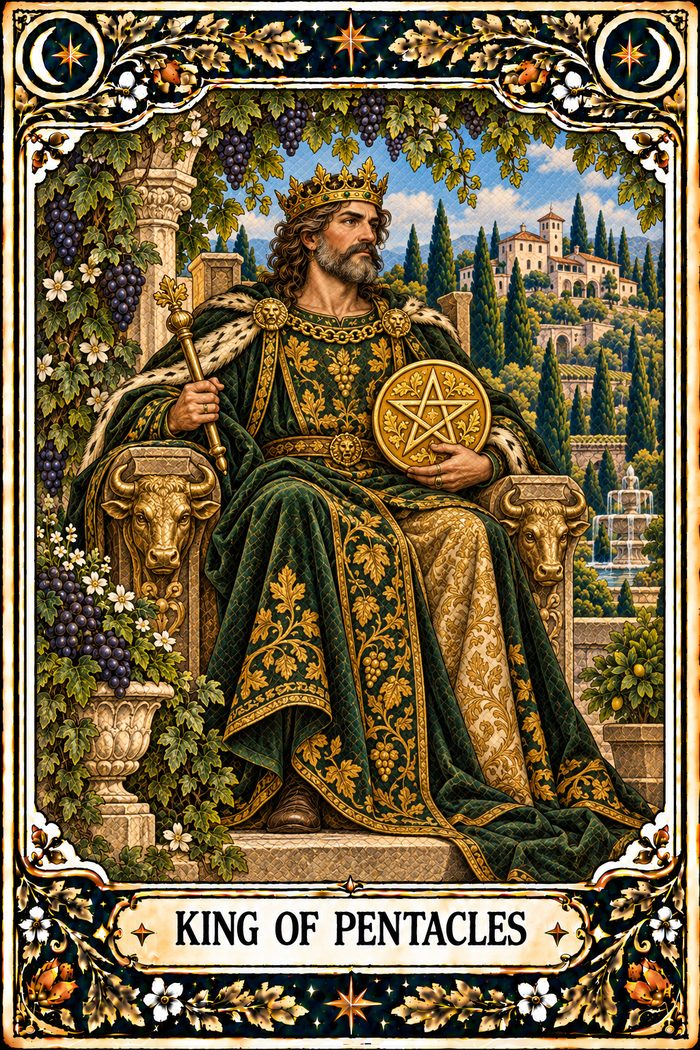
King of Pentacles
Upright: Real, earned abundance — financial security built over time and shared generously rather than hoarded. Steady wealth, held with a disciplined and open hand.
Reversed: Security that's calcified into greed — materialism replacing generosity, or a stubbornness that refuses any approach besides the one that already worked before.